

KING’S COLLEGE CONCESSION: When Teachers Block the Gate, Who Really Owns Nigeria’s Public Schools?
Exclusive to Ekocity | By Ekocity Education & Public Affairs Desk
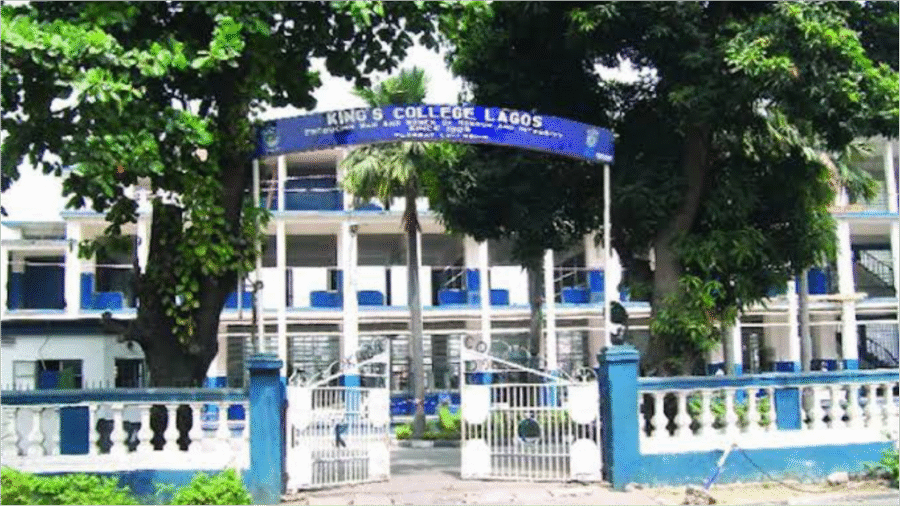
The gate of King’s College, Lagos, has become the latest battleground in Nigeria’s increasingly heated debate over the future of public education.
On Tuesday, September 15, workers at the 117-year-old institution reportedly prevented representatives of the King’s College Old Boys’ Association (KCOBA) from entering the school premises as tensions continued over the Federal Government’s planned 35-year concession of the institution. Police reportedly intervened as the confrontation unfolded.
The image is powerful: teachers and workers standing at the gate of one of Nigeria’s most prestigious schools, while the proposed concessionaire is attempting to gain access to begin the transition process.
But behind the confrontation is a much bigger question: Can a public school be modernised through private management without losing its public character?
The Federal Government insists that King’s College has not been sold or privatised.
Education Minister Dr Tunji Alausa says the government will retain legal ownership, regulatory authority and oversight. Under the proposed PPP, KCOBA would finance, rehabilitate, modernise, operate and maintain the school. That distinction matters.
But for teachers, parents and workers opposing the arrangement, the concern is not simply who holds the title to the land. Their question is: who controls the school, who pays for it, who employs its workers and what happens to the character and affordability of the institution?
The Funding Question
The government’s argument is straightforward. King’s College needs substantial investment. Rather than relying entirely on public funding, the concession would bring in private capital and management expertise.
Under the transition arrangement, government funding from the Federation Account is expected to cease after the handover period, while KCOBA assumes responsibility for operating costs under the concession.
That immediately raises another question: Can the government guarantee that a historically public institution will remain accessible to ordinary Nigerian families over the life of a 35-year concession?
Parents have raised precisely this concern, arguing that children admitted as students of a Federal Government Unity School should not suddenly find themselves inside a fundamentally different financial and administrative model.
Why The Teachers Are Angry
The opposition has already spread beyond King’s College. Education unions directed workers across Federal Unity Colleges not to resume, arguing that the King’s College arrangement could establish a precedent for transferring other public schools to private interests.
The action disrupted the beginning of the 2026/2027 academic session in several institutions. The government and the unions are therefore arguing over more than one school. They are arguing over the philosophy of public education in Nigeria.
There Is Another Side
There is an uncomfortable truth that must also be acknowledged. Nigeria’s public schools desperately need investment.
Classrooms, laboratories, hostels, libraries, sporting facilities, healthcare infrastructure and staff welfare cannot be sustained by sentiment alone.
If a credible private-public partnership can bring billions of naira of investment into an institution without transferring ownership or compromising access, that possibility deserves serious examination. But it must be transparent.
The concession agreement should be available for public scrutiny. Its financial obligations, performance indicators, fee policy, employment provisions, admission rules, maintenance obligations and termination clauses should be clearly understood.
The King’s College Test
The crisis at the gate should not become a battle between teachers and old boys. Nor should it become a political contest between government and unions. It should become a test of whether Nigeria can design public-private partnerships that genuinely serve the public interest.
KCOBA has a legitimate interest in preserving and improving an institution whose alumni have contributed enormously to Nigeria. The Federal Government has a responsibility to protect public education.
Teachers have a responsibility to protect their students and their profession. Parents have a right to demand transparency.
And students — perhaps the most important stakeholders — deserve continuity, quality education and certainty about their future. The immediate confrontation may be at the King’s College gate.
But the bigger gate Nigeria is standing before is the gate between public ownership and private management. Before that gate is opened, Nigerians deserve to know exactly what is on the other side.
Because King’s College is not merely a school. It is a test of how Nigeria intends to manage its public institutions in the next generation.

Fawumi Kayode Abiodun
Political Analyst | CEO, Ekocity Media | Publisher, Ekocity Magazine and The Capitol Post
Add a Comment