

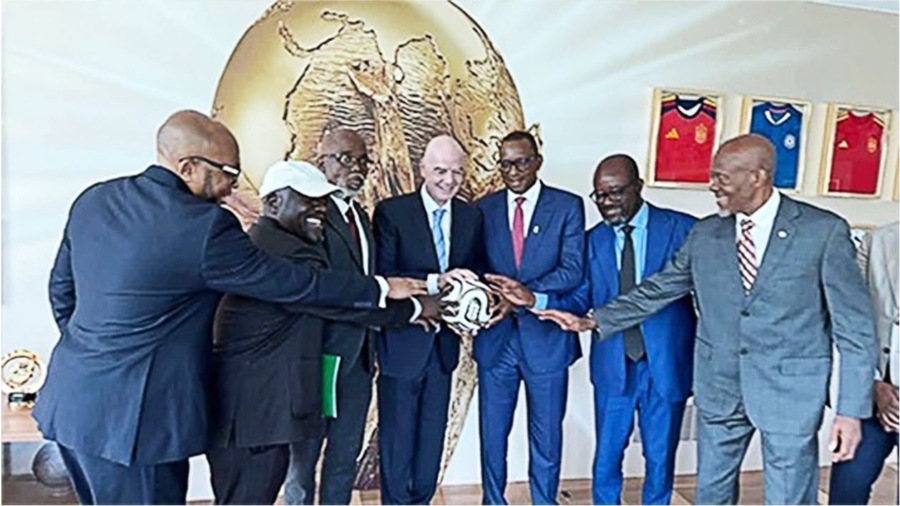
NIGERIA’S FOOTBALL RESET: FIFA AND CAF ENTER THE ROOM
As FIFA and CAF engage Nigerian football stakeholders following the resignation of the NFF leadership, the country faces a question larger than who runs the federation: Can Nigeria finally build a football system worthy of its talent?
Exclusive to Ekocity | By Ekocity Sports & Business Desk
Nigeria is entering one of the most consequential moments in its football administration in years. Following the resignation of the Nigeria Football Federation’s principal officers, FIFA has accepted the departures and begun working with Nigerian authorities and the Confederation of African Football on a short-, medium- and long-term reform roadmap. The discussions in Abuja are not simply about replacing football administrators. They have opened a wider conversation about how Africa’s most populous nation’s football should be governed. A Giant on the Pitch, a Struggle in Administration
Nigeria has produced generations of elite footballers, from African champions and Olympic heroes to stars competing in Europe’s biggest leagues. Yet the country’s football institutions have repeatedly faced disputes over governance, elections, domestic competitions, development structures and accountability.
President Bola Tinubu’s August directive for comprehensive football reform identified governance, stakeholder representation, development pathways, domestic competitions and accountability among areas requiring attention. The FIFA-CAF engagement therefore arrives at a moment when the debate has moved beyond the Super Eagles to the architecture supporting Nigerian football. Who Gets a Voice? The Abuja consultations have involved a broad range of stakeholders, including State Football Associations, players, coaches, referees, league representatives, former administrators and club owners.
That breadth matters. Football is an ecosystem. The Super Eagles are its most visible product, but underneath the national team are thousands of young players, academies, clubs, coaches, referees, women’s teams and commercial organisations.
A sustainable reform cannot focus solely on the national teams. The Caretaker Question One of the most sensitive issues is how Nigeria should manage the transition. Reports from the consultations indicate differing views among stakeholders. Some State FA officials have advocated a Congress-led process involving statutory reforms and fresh elections, while other voices have discussed the possibility of a FIFA/CAF-backed Normalisation Committee.
The mechanism matters because the credibility of the transition could influence confidence in whatever administration eventually emerges. But the larger test will come after the transition. Building a Football Economy Nigeria’s reform conversation presents an opportunity to address more than federation politics. Domestic league administration, youth development, women’s football, coaching education, refereeing, stadium infrastructure, commercial rights and financial transparency all form part of the country’s football economy.
Nigeria already possesses something many football markets spend decades trying to create: an enormous football audience and an extraordinary supply of talent. The missing link is a stable institutional framework capable of converting that talent and passion into sustainable sporting and economic value.
The Moment FIFA and CAF can facilitate dialogue. Government can create an enabling environment. Football stakeholders can negotiate the rules. But Nigerians must ultimately build the institution. The country does not simply need another football election. It needs credible governance, stronger development pathways and a football system capable of producing excellence both on the pitch and in the boardroom. For a nation that has repeatedly demonstrated that its players can compete with the world, the next challenge is clear:
Can Nigeria build a football institution worthy of the players it produces?

Fawumi Kayode Abiodun
Political Analyst | CEO, Ekocity Media | Publisher, Ekocity Magazine and The Capitol Post
Add a Comment