

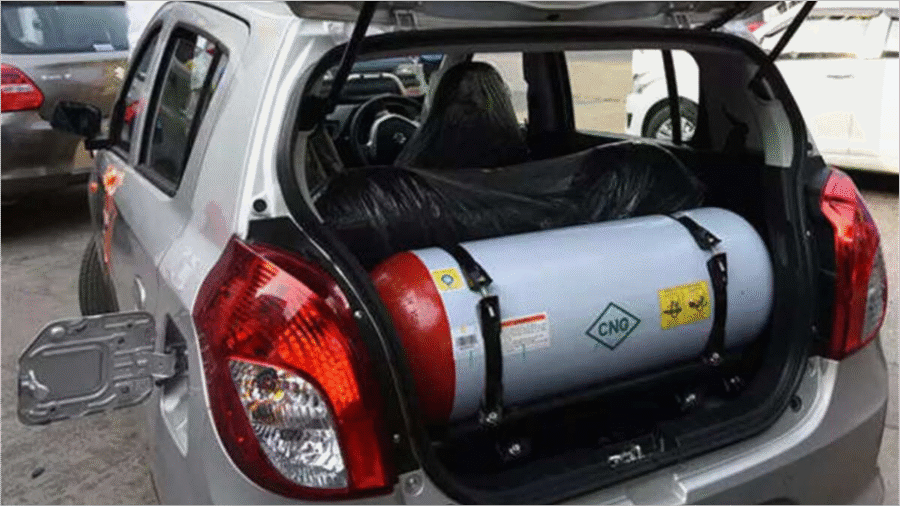
The CNG State Race: Nigeria’s Governors Turn Cheaper Gas Into a Fare War
From Borno to Oyo, Kaduna to Enugu, states are beginning to show what cheaper energy could mean for the Nigerian commuter — but the real test will be whether the savings survive beyond government-backed fleets.
Exclusive to Ekocity | Energy, Economy & Mobility Desk
Nigeria’s CNG experiment is entering a new phase. What began largely as a Federal Government response to the removal of petrol subsidies is increasingly becoming a state-by-state race to bring down the cost of transportation.
President Bola Ahmed Tinubu has now set October 1 as the target for more Nigerians to begin experiencing measurable reductions in transport costs, following his August 27 meeting with the 36 governors. An implementation committee under the Nigeria Governors’ Forum is coordinating the programme. And some states are already showing what is possible.
The Numbers Are Getting Attention
In Borno, CNG-powered and electric public transport services are reportedly carrying passengers for between ₦50 and ₦100, compared with commercial fares of ₦300–₦600. In Oyo, the introduction of CNG buses by Pacesetter Transport reportedly reduced the Lagos–Ibadan fare from about ₦8,000 to ₦3,200 during the initial deployment. In Enugu, 100 CNG buses have brought the Enugu–Nsukka fare down from ₦2,500 to ₦1,500.
Adamawa has reported reductions of up to 50 per cent, while government-supported buses in Plateau carry about 13,000 passengers daily at ₦200, compared with commercial fares exceeding ₦500.
Kaduna has taken an even more aggressive approach: 100 CNG buses have been providing free transportation on major routes. The Federal Government says those buses carried about 3.2 million passengers during their first year, generating more than ₦3.5 billion in reported transport savings.
The Real CNG Race
The interesting development is no longer simply who has converted the most vehicles. It is which state can translate cheaper energy into a permanent reduction in the cost of living. Transport is embedded in almost every Nigerian price.
When it becomes cheaper to move workers, farmers, students and goods, the impact can travel through the economy. That is why the governors’ programme matters beyond buses.
But There Is A Warninng
Government-owned buses can charge fares that private operators cannot sustain if they are heavily subsidised. The real test will come when CNG transport moves beyond special government fleets and becomes commercially viable for ordinary operators.
Nigeria currently has more than 120,000 converted vehicles, over 400 certified conversion centres and more than 90 CNG refuelling stations, according to the President. That infrastructure will have to expand dramatically.
Otherwise, Nigeria risks creating islands of cheap transport surrounded by an expensive conventional market.
From Subsidy To Infrastructure
The significance of the CNG strategy is that it offers a different answer to Nigeria’s old fuel-subsidy problem. Instead of making petrol artificially cheap, government is attempting to make an alternative energy source cheaper to use.
That is a much harder strategy — but potentially a more sustainable one.The question now is whether states can build enough buses, conversion centres, refuelling stations and partnerships with transport unions to make the savings widespread.
Because the success of the programme will ultimately be measured at the bus stop. Not in Abuja. Not in government announcements. But when a commuter who once paid ₦1,000 discovers that the same journey now costs ₦600 — and the price stays there. Nigeria’s CNG race has started. The winner will not be the state with the biggest announcement. It will be the state that makes affordable mobility a permanent reality.
Ekocity Energy, Economy & Mobility Desk

Fawumi Kayode Abiodun
Political Analyst | CEO, Ekocity Media | Publisher, Ekocity Magazine and The Capitol Post
Add a Comment