

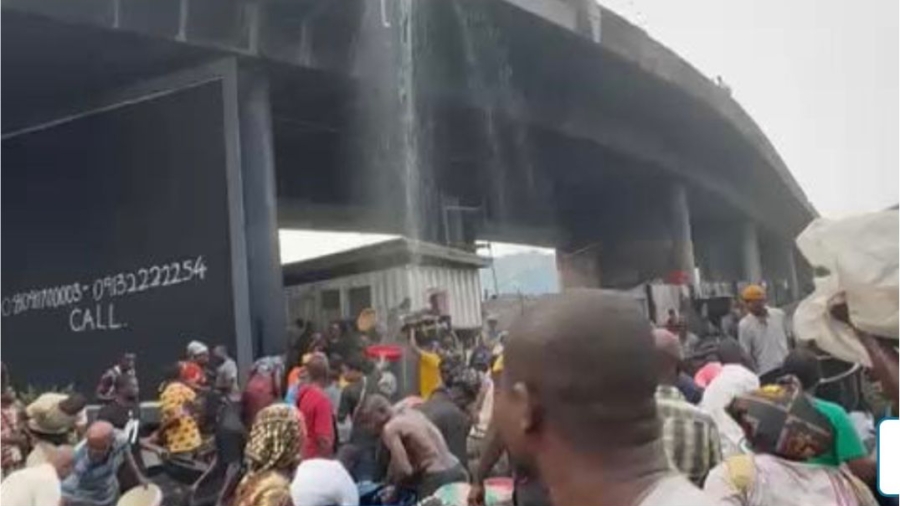
A large crowd gathered beneath a flyover in Apapa, Lagos, on Tuesday after a petrol tanker overturned on the bridge above, spilling fuel onto the road below. The tanker, balanced precariously along the edge of the flyover, leaked petrol in steady streams, drawing people who rushed to collect the highly flammable liquid despite the obvious danger.
Eyewitnesses described scenes of desperation as men, women, and youths positioned themselves directly under the bridge with buckets, basins, and jerrycans, attempting to scoop the cascading fuel. The smell of petrol hung thick in the air, while vehicles and pedestrians continued to move nearby, heightening the risk of a spark that could trigger a fire or explosion.
Safety officials were reportedly slow to cordon off the area, allowing the crowd to swell as word spread of the spill. Some residents said the rising cost and scarcity of fuel made the risk feel “worth it,” a stark reflection of the economic pressures facing many households. “People know it is dangerous, but hunger and hardship push them to take chances,” one bystander said.
Incidents involving overturned fuel tankers are not new in Lagos or other parts of Nigeria, and they often expose a troubling pattern: weak enforcement of safety protocols, delayed emergency response, and public desperation fueled by poverty and inadequate social protection. In past cases across the country, similar scenes have ended in tragedy when spilled fuel ignited, leading to loss of lives and property.
Authorities eventually moved to disperse the crowd and manage the situation, but the episode has renewed calls for stricter traffic and safety controls for heavy-duty vehicles, faster emergency response, and sustained public awareness about the dangers of fuel scooping.
Beyond the immediate risk, the incident highlights a deeper crisis at the intersection of economic hardship, public safety, and governance. As long as fuel scarcity and poverty persist, experts warn that such dangerous scenes may continue to repeat; placing vulnerable citizens in harm’s way beneath bridges, highways, and broken systems meant to protect them.
Blessing Anolaba
Editorial & Creative Correspondent
A storyteller and journalist passionate about telling stories for policy change and impact.
Add a Comment