

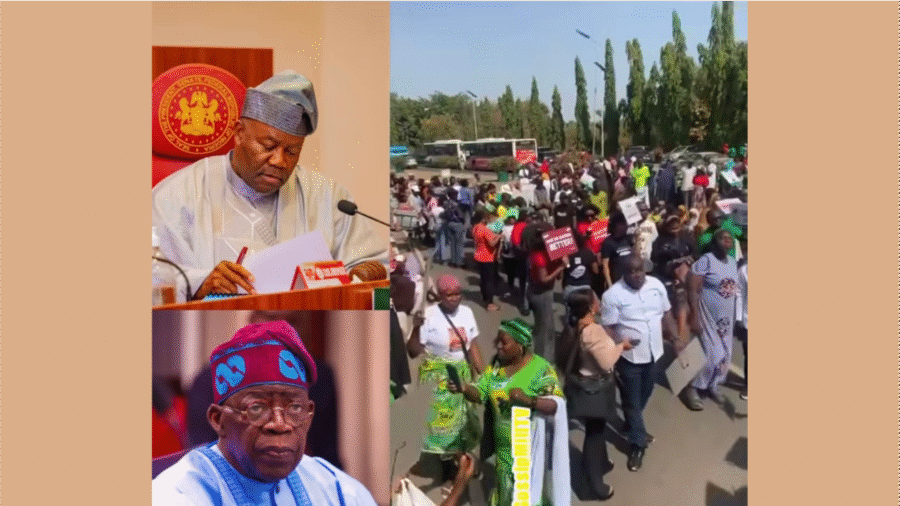
Nigerians Continue Protests at National Assembly Over Electronic Transmission of Results
Abuja, Nigeria — Protesters have once again gathered at the gates of the National Assembly of Nigeria, demanding that lawmakers guarantee the mandatory electronic transmission of election results in the ongoing amendment of the Electoral Act. The demonstrations, which have continued for days in the Federal Capital Territory, reflect growing public anxiety over the credibility of future elections, particularly as the country prepares for the 2027 general polls.
Chanting solidarity songs and holding placards with inscriptions such as “Our Votes Must Count” and “Protect Democracy,” civil society organisations, youth groups, political supporters and concerned citizens converged on the National Assembly complex to press home a single message: electronic transmission of results from polling units must be made compulsory and clearly defined in law.
The controversy stems from recent deliberations by lawmakers on provisions of the Electoral Act Amendment Bill dealing with the transmission and collation of results. While the bill retains electronic transmission to the portal of the Independent National Electoral Commission (INEC), critics argue that the inclusion of manual collation as a backup option could weaken transparency and leave room for manipulation. Protesters insist that any ambiguity in the law may undermine public trust in the electoral process.
For many demonstrators, the issue goes beyond legislative wording. They say it is about restoring confidence in Nigeria’s democracy after past elections were marred by disputes over result collation. Activists argue that technology-driven transmission directly from polling units reduces human interference, speeds up the process, and ensures that results declared at the polling unit level are consistent with what is recorded centrally.
Among those who have publicly supported the protests is Peter Obi, who joined demonstrators in Abuja and called for greater transparency in the electoral system. Civil society coalitions have also maintained that Nigeria has invested significantly in election technology and should not dilute reforms that promote accountability.
On the other hand, some lawmakers have raised concerns about infrastructure gaps, particularly network coverage challenges in remote communities. They argue that a manual fallback option is necessary to avoid potential disruptions on election day. Protesters, however, counter that technological limitations should be addressed through improved planning rather than by weakening legal safeguards.
Security presence around the National Assembly has remained tight, but the protests have largely been peaceful. Organisers say they will continue to mobilise citizens until the final version of the amended Electoral Act clearly mandates real-time electronic transmission without loopholes.
As deliberations continue within the National Assembly, the debate has evolved into a broader national conversation about trust, accountability, and the future of democratic governance in Nigeria. For many Nigerians on the streets of Abuja, the demand is simple: elections must not only be conducted, but must also be seen to be credible and electronic transmission of results is viewed as a critical step toward achieving that goal.
Blessing Anolaba
Editorial & Creative Correspondent
A storyteller and journalist passionate about telling stories for policy change and impact.
Add a Comment