

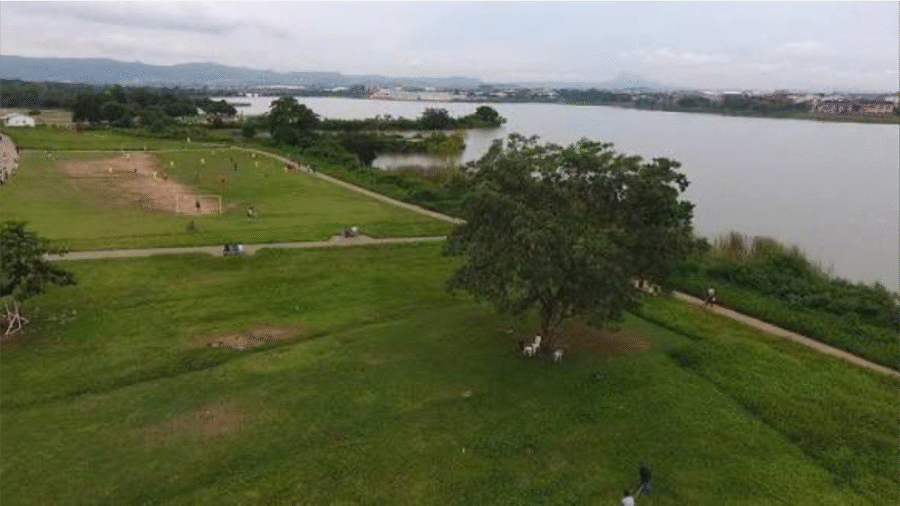
Jabi Lake Redevelopment: Who Is It Really For?
Along the shores of Jabi Lake Park, the sound of construction now competes with the familiar rhythm of joggers, families, and street vendors who have long defined the space. What was once a calm, open-access public park is being reshaped into something far more ambitious, a high-end recreational destination that authorities say could rival global attractions like Times Square or the Dubai Fountain.
On paper, the vision is bold. A modern waterfront, upgraded infrastructure, and world-class aesthetics could elevate Abuja’s profile, attract tourism, and stimulate economic activity. In a city often criticized for underutilized public spaces, the promise of a revitalized Jabi Lake Park sounds, at first glance, like progress.
But beneath the glossy projections lies a growing unease.
For many Abuja residents, Jabi Lake Park is one of the few genuinely public spaces in the capital. It is where families gather without spending much, where young people unwind, and where informal vendors make a living. The fear now is that redevelopment could quietly redefine who the space is meant for.
Critics argue that the project reflects a familiar pattern in urban development: the gradual transformation of public assets into commercial hubs. While such projects are often framed as modernization, they can come at the cost of accessibility. When high-end restaurants, curated experiences, and private investments dominate a space, affordability tends to shift and with it, the demographic that can comfortably use it.
At the heart of the debate are unresolved questions. Will entry remain free, or will access become tiered? Will informal vendors, many of whom depend on the park for survival be integrated into the new plan or displaced? And ultimately, who stands to benefit most from this transformation?
There is also a deeper issue of transparency. Large-scale urban projects demand clear communication, especially when they involve spaces that belong, in principle, to the public. Yet, many residents say details about the redevelopment, its funding structure, long-term management, and public access guarantees remain vague.
Urban renewal, when done right, can be inclusive. Cities around the world have demonstrated that development and accessibility do not have to be mutually exclusive. Public spaces can be upgraded without losing their essence without becoming exclusive enclaves for those who can afford them.
But that balance requires intentional design and policy choices. It requires safeguards that protect open access, deliberate inclusion of small-scale entrepreneurs, and a commitment to ensuring that public spaces remain, fundamentally, public.
The transformation of Jabi Lake Park is still unfolding. Whether it becomes a symbol of inclusive progress or another case of quiet exclusion will depend not just on the structures being built, but on the decisions being made behind the scenes.
For now, the question lingers; one that echoes far beyond the lake itself: when a public space is redeveloped, does it still belong to everyone, or only to those who can afford the new experience?

Fawumi Kayode Abiodun
Political Analyst | CEO, Ekocity Media | Publisher, Ekocity Magazine and The Capitol Post
Add a Comment