

What Does NNPC Own?
This is where the ownership story becomes particularly interesting. NNPC Limited originally agreed to acquire a 20% stake in the refinery for approximately $2.76 billion. That stake was subsequently reduced, with NNPC’s effective ownership settling at approximately 7.25%.
The Nigerian state therefore remains a shareholder in one of the country’s most strategically important private-sector energy assets. For taxpayers, the refinery’s performance is not entirely a private matter: if the company becomes more profitable and its valuation rises, the value of NNPC’s existing stake could increase as well. That creates a notable alignment between private capital and public economic interest.
But Who Really Owns the Refinery?
The answer matters. The IPO does not mean Nigerians are suddenly becoming equal owners of the Dangote Refinery — far from it. Dangote will retain majority control, and the public offering is designed to broaden the shareholder base while preserving the founder’s strategic control.
This distinction is important for prospective investors. Buying shares does not mean buying control; it means acquiring an economic interest in the company’s future performance. That performance will depend on profitability, refining margins, crude supply, operating efficiency, government policy, exchange rates and global energy markets.
Why This IPO Matters to Nigeria
The Dangote IPO arrives at a crucial moment for the Nigerian capital market. Nigeria needs deeper pools of domestic capital, broader participation in long-term investment, more major productive businesses listed on the Nigerian Exchange, and successful examples of companies moving from private ownership to broad public participation. The Dangote transaction could help accomplish all of these.
The Punch Editorial Board has described the IPO as a test of whether Nigeria can transform a major industrial investment into a broader instrument of wealth creation. That is perhaps the bigger story. The question is no longer simply “How successful is Dangote Refinery?” The question is: “Can Nigerians participate meaningfully in the wealth being created by one of Africa’s biggest industrial assets?”
What Could It Mean for the Average Investor?
For the ordinary Nigerian, the attraction is obvious. The offer has been deliberately structured to make retail participation possible: the minimum subscription is 10 shares, meaning an investor can enter at approximately ₦5,250 before transaction costs. That potentially places ownership of a major industrial company within reach of a far wider section of the population.
But accessibility should not be confused with guaranteed profit. An IPO is an investment — not a savings account, not a government guarantee, and certainly not a promise that the share price will rise immediately after listing. The investor is buying into the future earnings of a business, and that future carries both opportunities and risks.
The Investment Case
There are several reasons investors may find the refinery attractive:
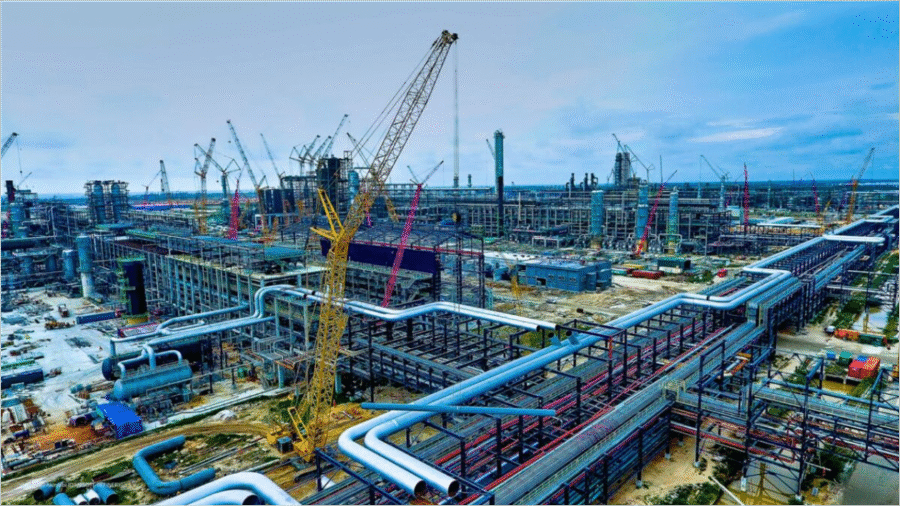
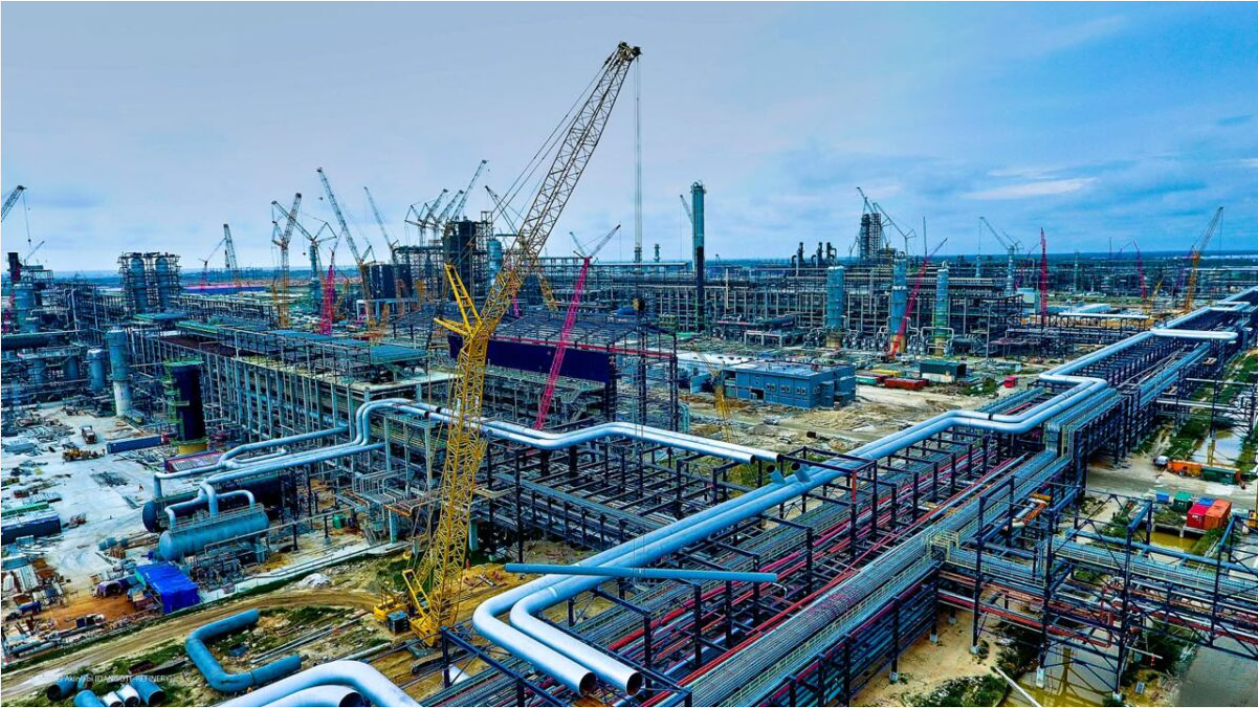
Scale. At approximately 700,000 barrels per day, the refinery is already one of the world’s largest refining facilities. The planned expansion to 1.4 million barrels per day would place it at an even more extraordinary scale.
Strong recent financial performance. The refinery reported approximately $1.82 billion in net profit in the first half of 2026, compared with a loss in the corresponding period of the previous year, while revenue exceeded $13 billion. Those figures demonstrate the earnings potential of the operation.
Export potential. Dangote Refinery is increasingly positioned not only as a Nigerian fuel supplier but as an African and international exporter, providing exposure to foreign-currency revenues and international petroleum markets.
Expansion. The proposed $14.3 billion expansion could significantly increase future production capacity, creating the possibility of substantially larger revenues for long-term investors.
Strategic importance. Unlike many businesses, the refinery occupies a strategic position in Nigeria’s energy economy. Its success affects fuel supply, imports, foreign exchange, industrialisation and regional energy security — implications that extend well beyond its shareholders.
But There Are Risks
A professional investment conversation must also examine the other side.
Oil price and refining-margin risk. Refineries do not operate in a vacuum. Profitability depends partly on the spread between crude-oil input costs and refined-product prices, meaning changes in global oil prices and refining margins can directly affect earnings.
Operational risk. A facility of this scale is extraordinarily complex. Equipment failures, maintenance requirements, crude-supply disruptions or technical problems could affect production.
Expansion risk. Doubling capacity is an enormous undertaking. The larger the project becomes, the greater the capital requirements, execution challenges and financing risks.
Regulatory risk. The refinery operates within Nigeria’s energy-policy environment. Government decisions on fuel pricing, imports, crude supply, taxation, foreign exchange and petroleum regulation can all influence profitability.
Valuation risk. Perhaps the most important question for investors is whether the IPO price is attractive relative to the company’s future earnings. A great company can still be a poor investment if investors pay too much for it — which is why investors should look beyond the Dangote name.
What About Energy Security?
This may ultimately be the IPO’s most important national consequence. Nigeria has spent decades expending scarce foreign exchange on imported refined petroleum products despite being one of the world’s major crude-oil producers. The Dangote Refinery changes that equation.
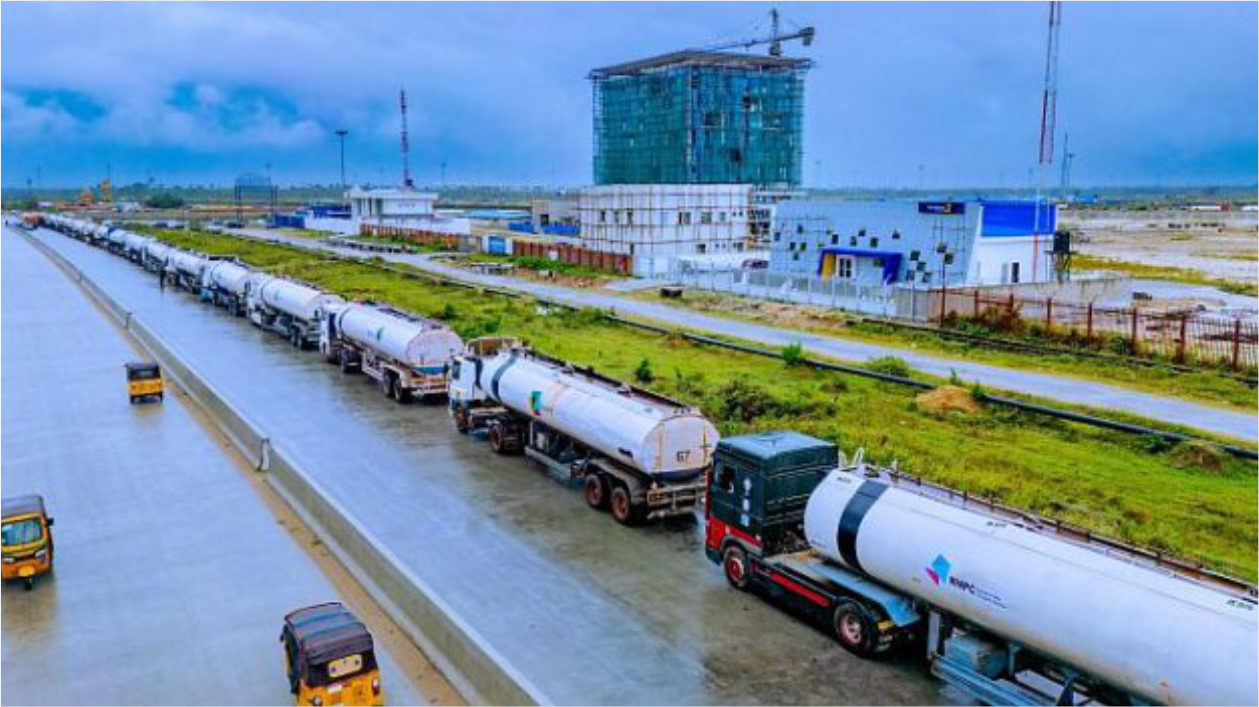
Domestic refining means more crude can potentially be processed locally, while refined products can be exported to other African markets. The refinery has already helped move Nigeria toward becoming a significant exporter of refined petroleum products — and if capacity reaches 1.4 million barrels per day, the implications become even greater. Nigeria could strengthen its position as a regional energy hub, generating foreign exchange, creating industrial jobs, deepening logistics networks and supporting associated petrochemical and manufacturing industries.
The Capital-Market Test
There is another story hiding behind the refinery: can the Nigerian Exchange absorb a company of this magnitude?
The Dangote Refinery could become one of the largest companies on the Nigerian market by market capitalisation. CardinalStone has projected a possible post-listing market capitalisation of approximately ₦77.7 trillion under its 12-month target scenario. If realised, that would fundamentally alter the scale of Nigeria’s equity market, attracting institutional investors, increasing liquidity, drawing international attention to the NGX and — perhaps most importantly — encouraging other large privately held Nigerian companies to consider public listings.
The Dangote IPO could therefore become bigger than Dangote. It could become a catalyst for Nigeria’s entire capital market.
Can Nigerians Become Shareholders in Their Own Economic Transformation?
This is perhaps the most compelling question. Nigeria has enormous businesses, entrepreneurs and industrial projects — banks, telecommunications companies, manufacturers, energy companies and technology firms — yet a large proportion of Nigerians remain spectators rather than shareholders.
The Dangote IPO provides an opportunity to change that culture. Instead of simply buying the products of Nigerian companies, citizens can potentially participate in their ownership. Instead of watching industrialisation from the sidelines, they can become investors in it. That is the deeper promise of the capital market.
But Nigerians Must Invest With Their Eyes Open
The excitement surrounding the Dangote name should not replace due diligence. Prospective investors should study the prospectus, understand the company’s financial position, examine the risks and determine whether the investment fits their financial objectives.
The fact that Aliko Dangote has built one of Africa’s largest industrial enterprises is relevant — but it does not guarantee future share-price performance. The refinery must continue to execute, maintain profitability and manage its expansion responsibly. Ultimately, public shareholders will judge the company by the same principle that governs every listed company: performance.
A Defining Moment for Nigeria
The Dangote Refinery began as an extraordinarily ambitious private-sector project. It survived delays, financing challenges, construction difficulties and years of scepticism, and today stands as one of the most consequential industrial assets in Africa. Now it is taking another step: from a privately controlled industrial project to a publicly owned investment opportunity.
The significance extends beyond Aliko Dangote, beyond the Nigerian Exchange and beyond the refinery itself. This is a test of whether Nigeria can build a culture in which ordinary citizens participate in the ownership of productive assets. If successful, the Dangote IPO could demonstrate that Nigerian capital can finance Nigerian industry, that Nigerian investors can own Nigerian businesses, and that Nigeria’s capital market can support projects of global scale.
The Bottom Line
The Dangote Refinery IPO is not simply a story about buying shares. It is a story about ownership, capital, energy security and the future of Nigerian enterprise.
For Dangote, it provides capital for expansion. For the Nigerian Exchange, it provides scale. For NNPC, it creates an opportunity to benefit from the growth of a strategic energy asset in which it remains a shareholder. For Nigeria, it could strengthen domestic refining and export capacity. And for the ordinary Nigerian investor, it offers something that has historically been difficult to access: a chance to own a small piece of one of Africa’s biggest industrial stories.
The opportunity is significant. The risks are real. And the market will ultimately decide whether the Dangote Refinery deserves to become one of Nigeria’s most valuable public companies. The refinery has already changed Nigeria’s energy story. Now, its IPO may change Nigeria’s investment story.
Ekocity Business Insight
The biggest question is no longer whether Nigerians can buy Dangote Refinery shares. They can. The bigger question is whether Nigeria can turn this historic IPO into a lasting culture of public ownership, responsible investing and domestic wealth creation.
That is the real test. And that is why the Dangote Refinery IPO matters.

Fawumi Kayode Abiodun
Political Analyst | CEO, Ekocity Media | Publisher, Ekocity Magazine and The Capitol Post
Add a Comment