

WHEN THE PALACE ENTERS THE CAMPAIGN: NIGERIA’S ROYAL INSTITUTIONS AND THE POLITICS OF 2027
From Lagos to Benin, royal endorsements are becoming part of the 2027 political conversation — raising questions about influence, neutrality and where traditional authority ends and electoral politics begins.
Exclusive to Ekocity | By Ekocity Politics & Governance Desk
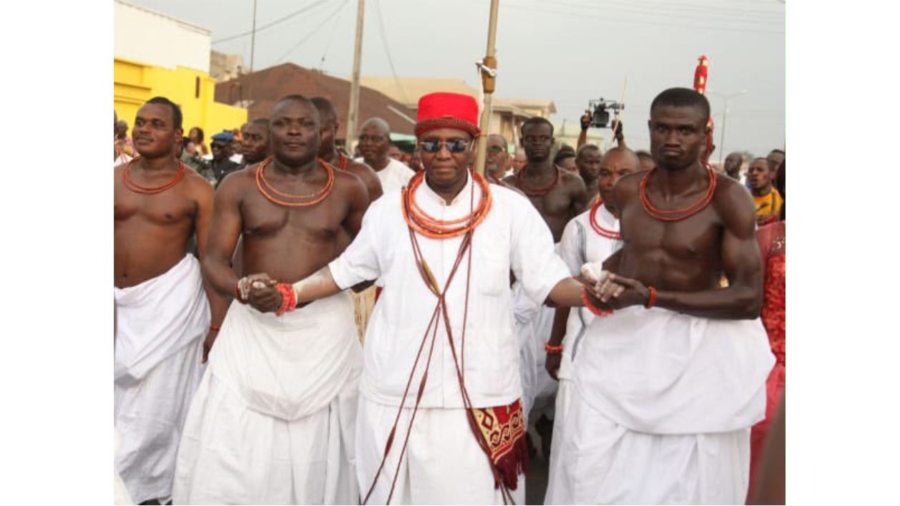
There is something striking about Nigeria’s 2027 political season: some of the most consequential political conversations are no longer taking place only at party headquarters, campaign rallies or legislative chambers. They are increasingly reaching the palace. Within days, two of Nigeria’s most prominent traditional rulers the Oba of Lagos, Rilwan Akiolu, and the Oba of Benin, Ewuare II have publicly expressed support for President Bola Tinubu’s second-term bid.
Akiolu told the All Progressives Congress Presidential Campaign Council that there was “no vacancy in Aso Rock” for the next four or five years. (The Cable)
In Benin, Ewuare II called for continuity and said there was no need to seek change simply for the sake of change. His comments came as the same APC campaign council visited the palace seeking royal blessings and support for Tinubu’s 2027 campaign. (The Cable)
The Oba of Benin, however, made an important distinction: he said the Benin traditional institution remained non-partisan and that his remarks should not be interpreted as support for a political party. (Blueprint Newspapers Limited)
That distinction points to the central tension. Traditional rulers occupy a unique position in Nigerian society. They are custodians of history, culture and community institutions. They can command respect across political, religious and social boundaries. Politicians therefore have obvious reasons to seek their blessings, counsel and public goodwill. But elections operate by a different logic. The president is not selected by a palace, a political dynasty or a traditional council. The office is determined through the constitutional electoral process. That is precisely the argument advanced by Atiku Abubakar’s media aide, Phrank Shaibu, after the Oba of Lagos endorsed Tinubu. He said traditional rulers may express personal preferences but cannot make an electoral decision on behalf of Nigerians. (Punch Newspapers)
There is another dimension worth watching. If monarchs openly identify with presidential candidates, what happens to their ability to mediate between opposing political communities after the election? The question is not whether a traditional ruler has the personal right to express an opinion. The more difficult question is whether political identification can affect the perception of the institution itself. Nigeria has seen enough political transitions to know that today’s allies can become tomorrow’s opponents. Akiolu himself urged politicians to remember that political disagreements should not become permanent hostility. (The Cable)
The contrast with the Sultan of Sokoto is instructive. During the campaign council’s visit, he urged voters to examine politicians’ promises and make their own choices. (The Guardian Nigeria)
As 2027 approaches, Nigeria may therefore be witnessing more than a series of royal endorsements. It may be witnessing a debate over the modern role of traditional authority itself. Can the palace remain a unifying institution while entering the political conversation? And when the campaign ends, can kings still stand comfortably in the middle of a divided political field? Those questions may ultimately matter as much as the endorsements themselves.

Fawumi Kayode Abiodun
Political Analyst | CEO, Ekocity Media | Publisher, Ekocity Magazine and The Capitol Post
Add a Comment