

THE MEXICAN KINGPIN AND THE EBONYI LAB: IS NIGERIA BECOMING A NEW FRONT IN THE GLOBAL DRUG WAR?
The arrest of a Mexican national and the discovery of an industrial-scale methamphetamine laboratory in Ebonyi expose a disturbing possibility: Nigeria may be attracting not only drug traffickers, but the infrastructure for drug production.
Exclusive to Ekocity | By Ekocity Politics & Security Desk
For years, Nigeria’s position in the international narcotics trade has largely been discussed through the language of trafficking: cocaine moving through airports, heroin along maritime routes and illicit substances crossing porous borders. The latest operation by Nigeria’s anti-narcotics agency raises a different and more troubling question. What happens when the laboratories arrive?
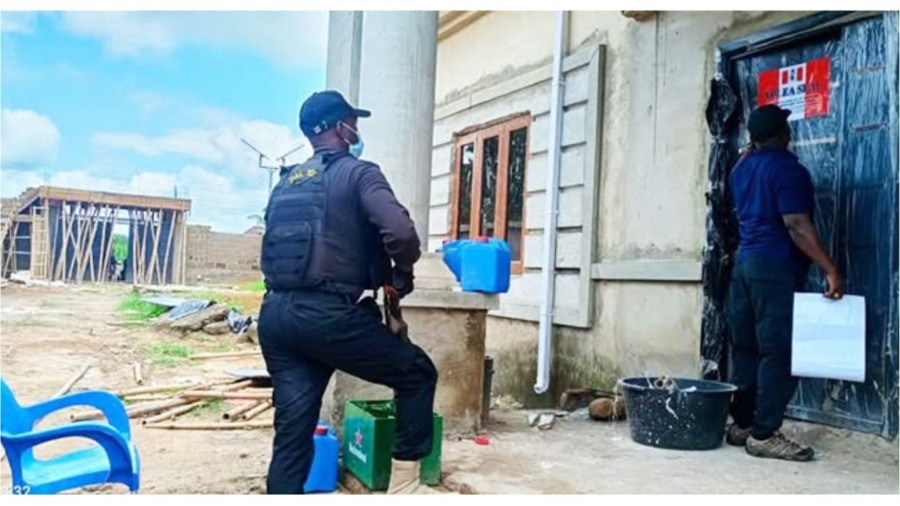
The National Drug Law Enforcement Agency says it has dismantled an industrial-scale methamphetamine laboratory in Ebonyi State and arrested a Mexican national it describes as an alleged kingpin of a wider transnational network. The suspect, Arturo Carrera Loaiza, was arrested at Lagos airport on August 19 while allegedly attempting to leave Nigeria. Investigators subsequently linked photographs recovered during the investigation to a property in Isiata Ugoni Okposi, Ebonyi State. (NDLEA)
What investigators reportedly found at the site was not consistent with an ordinary criminal hideout. NDLEA said the investigation uncovered laboratory equipment, chemical substances and evidence of methamphetamine production. A subsequent search of another location allegedly used to store relocated materials produced additional equipment and chemicals. (Punch Newspapers)
But the most significant part of the case may be the geography. The Ebonyi discovery did not occur in isolation. Earlier this year, the NDLEA arrested three Mexican nationals and seven Nigerians at a forest location in Ogun State. In June, another Mexican national, Jose Villa Ochoa, was arrested alongside four Nigerians at a clandestine laboratory in Oyo State. According to the agency, investigators subsequently established links between Ochoa and Loaiza. (Punch Newspapers)
Taken together, the operations have given investigators what appears to be a much larger map of suspected activity. And that map stretches from the forests of Ogun and Oyo to rural Ebonyi. The significance goes beyond the nationality of the suspect. Nigeria is attractive to criminal networks for many of the same reasons it is attractive to legitimate investors: a large population, extensive territory, commercial connections and access to regional markets. The danger is that rural and forested communities can also provide concealment.
NDLEA Chairman Mohamed Buba Marwa has warned that Nigeria will not become a haven for transnational cartels seeking to relocate laboratories into forests and rural communities. (NDLEA) That warning deserves attention because dismantling one laboratory does not necessarily dismantle a network. The real test will be what happens next.
Who financed the facilities?
Who acquired or transported the equipment?
Who provided local accommodation and logistical support?
Who owned or controlled the properties?
And, most importantly, where was the finished product supposed to go?
Those questions move the story from narcotics enforcement into national security. The NDLEA says its investigation is continuing and that it will pursue the wider network, including financiers and local collaborators. (ThisDayLive)
For Nigeria, therefore, the Ebonyi operation is not merely a story about a Mexican suspect arrested at an airport. It is a warning about how international criminal networks can operate across borders while embedding their infrastructure inside ordinary communities. The most important arrest may have happened at Lagos airport. But the bigger story may be what investigators found hundreds of kilometres away behind a property in rural Ebonyi. The question confronting Nigeria is no longer simply whether drugs are passing through the country. It is whether criminal organisations are beginning to see the country as a place where they can make them.

Fawumi Kayode Abiodun
Political Analyst | CEO, Ekocity Media | Publisher, Ekocity Magazine and The Capitol Post
Add a Comment