

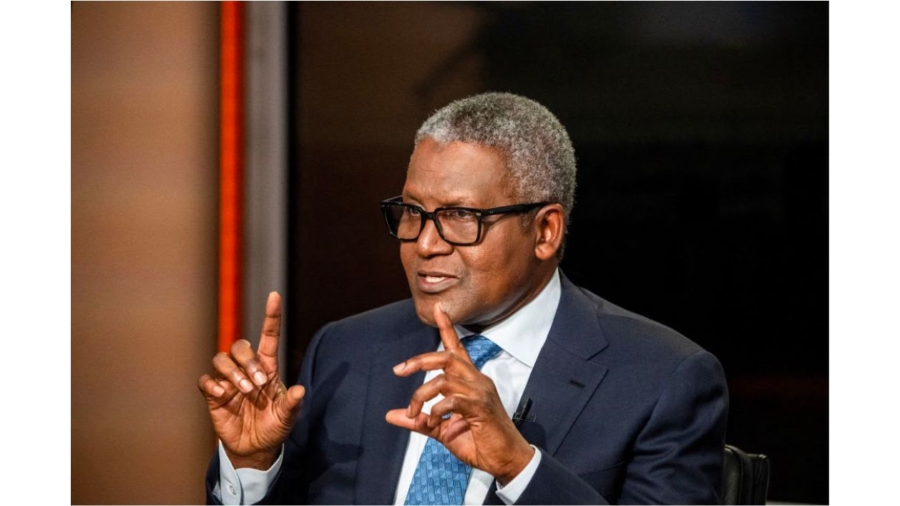
Dangote’s $10 Billion Power Bet Is a Bet on Africa’s Industrial Future
For decades, Africa’s electricity crisis has been treated as an infrastructure problem. Aliko Dangote is now making the case that it is something larger: a constraint on the continent’s economic future.
The President of Dangote Group has announced plans to invest more than $10 billion in Africa’s power sector over the next three to four years, potentially redirecting capital from other planned ventures, including steel, toward electricity generation and related projects.
The scale is striking. But the significance lies less in the number than in what the investment says about the changing economics of African industrialisation.
Dangote’s argument is straightforward: factories cannot compete without dependable electricity. Mines cannot operate efficiently. Data centres cannot scale. Transport systems become more expensive. Small businesses spend heavily on generators and fuel. And countries that cannot produce competitively remain dependent on imported goods.
Africa’s electricity deficit remains enormous. Dangote has pointed to more than 600 million Africans without access to electricity, describing the situation as incompatible with the continent’s ambitions for economic transformation.
For Nigeria, the announcement carries particular weight.
Dangote’s industrial empire has already demonstrated how electricity can become part of the production strategy itself. The company’s large industrial facilities require substantial and reliable power, making energy not merely a utility expense but an essential component of industrial competitiveness.
His latest proposal could extend that logic beyond his own factories.
If implemented at the announced scale, the investment could position Dangote Group as one of Africa’s most significant private-sector participants in power generation. But the details remain to be established. The company has not yet publicly disclosed the full list of countries, generation technologies, projects, financing structures or expected generating capacity associated with the proposed $10 billion-plus programme.
That uncertainty matters because Africa does not have a single electricity problem.
Some markets need new generation. Others need transmission lines. In many places, electricity exists but cannot reliably reach consumers. Still others require stronger distribution networks, better regulation and commercially viable tariffs before private capital can flow at scale.
The investment therefore raises a larger question: Can private industrial capital help solve a problem that governments have struggled with for decades?
There is precedent for Dangote moving into infrastructure where electricity and industry intersect. In Tanzania, the group has been discussing investments spanning energy, fertiliser, ports and transport infrastructure, including a proposed 2,000-megawatt power project.
The challenge will be converting ambition into dependable electrons.
Africa needs power that is affordable, predictable and available around the clock—not simply more installed generating capacity. It needs investment in gas, solar, hydro and other technologies where they make economic sense, alongside transmission and distribution.
That makes Dangote’s announcement more than another billionaire’s expansion plan.
It is a wager that Africa’s next industrial revolution will depend on who controls and develops its power infrastructure.
The refinery transformed Nigeria’s position in petroleum refining. The next transformation could be measured in megawatts.
And if Dangote succeeds in turning $10 billion into reliable electricity, the real product may not be power itself.
It may be African industrial capacity.

Fawumi Kayode Abiodun
Political Analyst | CEO, Ekocity Media | Publisher, Ekocity Magazine and The Capitol Post
Add a Comment