

INEC and AI: Real Reform or Another Technology Promise?
Amupitan says the commission is deploying artificial intelligence to detect errors in election results. The claim is credible — but Nigerians have every reason to demand proof before 2027.
Exclusive to Ekocity | Politics & Technology Desk
ABUJA — Nigeria has heard this story before.
A new technology arrives. Officials promise greater transparency. The public is told that the next election will be more efficient, more secure and harder to manipulate. Now, artificial intelligence has entered the conversation.
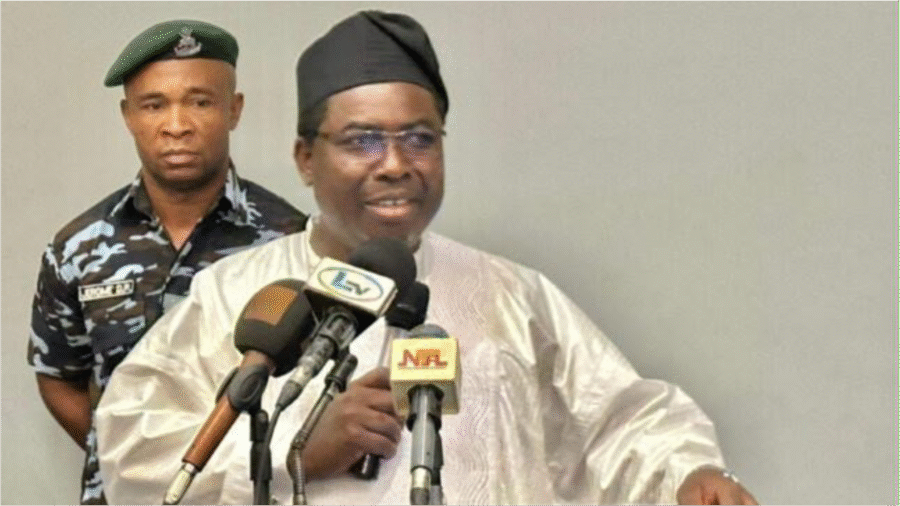
INEC Chairman Professor Joash Amupitan says the commission has begun deploying AI tools within its results-management process to identify discrepancies and administrative errors before results are finally validated.
He also says INEC has established an Artificial Intelligence Division, developed an AI Roadmap and Governance Framework, and is engaging technology companies including Microsoft and Google on cybersecurity and infrastructure.
So, is it real?
Yes — there is evidence that INEC is actually building and testing AI-related capabilities. But that does not mean Nigerians should simply take the announcement on trust. The important distinction is between deploying AI as a supporting tool and allowing AI to determine electoral outcomes.
Amupitan says the system will not replace human officials. AI-generated alerts or checks will remain subject to human auditing and legal verification. That is the correct principle.
The bigger question is whether INEC can make the technology transparent enough for the public to understand and trust. Nigeria’s electoral history has taught citizens to be suspicious of technology that is presented as a solution without adequate explanation.
BVAS and the INEC Result Viewing Portal were themselves introduced to strengthen electoral credibility. INEC now says it has added safeguards to BVAS that perform mathematical and over-voting checks before results are finalised.
AI could take that process further. It could potentially identify unusual patterns, inconsistent figures, duplicate entries or administrative anomalies much faster than human officers working manually.
But AI cannot solve every electoral problem.
It cannot stop vote buying.
It cannot prevent intimidation at polling units.
It cannot guarantee that election officials will behave professionally.
It cannot eliminate political interference.
And it cannot manufacture public trust.
That is where the word “hypocrisy” becomes complicated. Calling INEC’s AI announcement hypocritical would be premature because the commission has documented technology audits, testing, governance plans and partnerships around the technology.
But Nigerians would be justified in becoming sceptical if AI becomes another impressive headline without measurable results. INEC should therefore publish the basic architecture of the system.
What exactly will AI check?
Where will it operate?
Who controls it?
What happens when the machine flags a result?
Can political parties independently audit the process?
What safeguards protect voter data?
And most importantly:
Will Nigerians be able to independently verify that the technology is working as promised?
The 2027 election will not be judged by how sophisticated INEC’s technology sounds. It will be judged by whether the results can be trusted. AI may become one of INEC’s most powerful tools. But technology is not credibility.
Credibility comes when the machine, the human being and the institution all produce the same answer — transparently, independently and under public scrutiny.
That is the standard Amupitan should be held to.
Not promises.
Proof.

Fawumi Kayode Abiodun
Political Analyst | CEO, Ekocity Media | Publisher, Ekocity Magazine and The Capitol Post
Add a Comment