

KINSHASA ERUPTS: CONGO’S THIRD-TERM BATTLE PUTS DEMOCRACY ON THE EDGE
As protesters confront police over proposed constitutional changes, President Félix Tshisekedi faces a growing opposition movement determined to stop what it sees as a pathway to a third term.
Exclusive to Ekocity International Desk
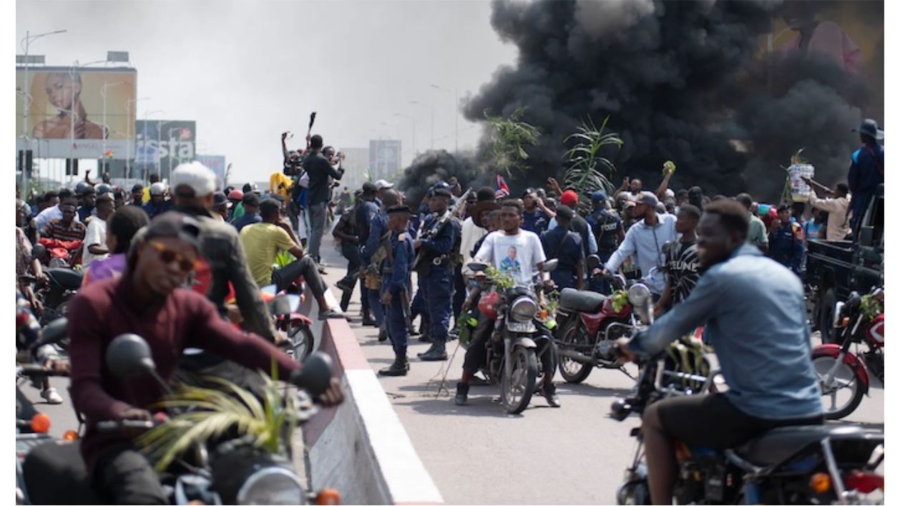
Kinshasa has become the latest flashpoint in Africa’s increasingly tense debate over presidential term limits. On Tuesday, September 15, hundreds of opposition supporters took to the streets of the Democratic Republic of Congo’s capital to protest proposed constitutional changes that could open the door for President *Félix Tshisekedi* to seek a third term. Police responded with tear gas and warning shots, while clashes erupted between opposition demonstrators and pro-government activists. Arrests were also reported in Kinshasa and other parts of the country. The demonstrations were organised by *Coalition Article 64, or C64*, a broad opposition alliance formed to resist constitutional amendments that opponents say could undermine the country’s presidential term limits. And the timing could hardly be more politically sensitive.
THE THIRD-TERM QUESTION
Under the current Congolese Constitution, the president is limited to two five-year terms. Tshisekedi, who first took office in 2019 and won re-election in 2023, is therefore constitutionally expected to leave office in 2028. But a proposed constitutional revision has changed the political conversation. Parliament approved legislation in June that could pave the way for constitutional amendments to be submitted to a referendum. Tshisekedi has indicated support for constitutional reform, while his opponents argue that the process could ultimately be used to remove the barrier preventing him from seeking another term. That possibility has transformed what might otherwise have been a legal debate into a street-level political confrontation.
KINSHASA’S WARNING
The protests are not confined to Kinshasa. Demonstrations or attempted demonstrations were also reported in Lubumbashi, Mbandaka, Uvira and other areas, with authorities imposing restrictions in some locations. In Kinshasa, opposition leader *Martin Fayulu accused security forces of protecting pro-government youth groups during the confrontation. Government officials, however, have rejected the opposition’s characterisation of the security response and maintain that authorities have a responsibility to preserve public order. That competing narrative is becoming central to the crisis.
A COUNTRY ALREADY UNDER PRESSURE
The constitutional confrontation is unfolding while Congo is dealing with multiple national emergencies. In the east, fighting involving the M23/AFC rebel movement continues to complicate the country’s security situation. At the same time, Congo is battling a major Ebola outbreak that has spread across several provinces.
The combination is extraordinary: political instability, armed conflict, displacement and a public-health emergency all at the same time. That makes political restraint particularly important.
THE CHURCH AND OPPOSITION
The constitutional proposal has also drawn criticism from influential civil-society and religious voices, including the Catholic Church. Human Rights Watch has separately warned of increasing restrictions on journalists, activists and opposition figures in Congo, citing arrests and crackdowns on peaceful demonstrations earlier this year. That history makes Tuesday’s confrontation especially significant. The question is no longer only whether Tshisekedi can legally pursue constitutional reform. It is whether the process can occur without triggering a broader crisis of public trust.
THE AFRICAN QUESTION
Congo’s struggle is part of a larger African political pattern. Across the continent, constitutional term limits have increasingly become a critical test of democratic institutions. The argument from governments is often that constitutions can legitimately evolve. The argument from opponents is that constitutional reform must not become a mechanism for extending personal rule. That distinction will be watched closely beyond Congo.
WHY THE WORLD SHOULD WATCH KINSHASA
The Democratic Republic of Congo is not an ordinary country. It is one of Africa’s largest nations by territory and population and possesses enormous reserves of strategic minerals, including copper and cobalt that are essential to the global energy and technology industries. Political instability in Kinshasa therefore has consequences beyond Congolese politics. Investors are watching. Neighbouring governments are watching. Washington, Beijing and Brussels are watching. And millions of Congolese citizens are watching most closely of all. The country needs political stability to confront its security and economic challenges. But stability cannot simply mean the absence of street protests. It must also mean confidence that institutions work, opposition voices can be heard, and constitutional rules apply equally to everyone.
EKOCITY INTERNATIONAL DESK: THE BIG QUESTION
President Tshisekedi now faces a delicate political calculation. He can argue that constitutional reform is necessary for the country’s future. His opponents can argue that the reform is ultimately about extending his presidency. The danger is what happens if neither side trusts the other. That is when constitutional debates become street battles. And when street battles become political crises. For Congo, the stakes could not be higher. The issue before Kinshasa is no longer simply whether the Constitution can be changed. It is whether Congo can change its Constitution without breaking public confidence in the democratic system. For now, the streets have delivered their answer. They are watching. They are angry. And they are refusing to remain silent.
EKOCITY INTERNATIONAL DESK
September 2026

Fawumi Kayode Abiodun
Political Analyst | CEO, Ekocity Media | Publisher, Ekocity Magazine and The Capitol Post
Add a Comment