

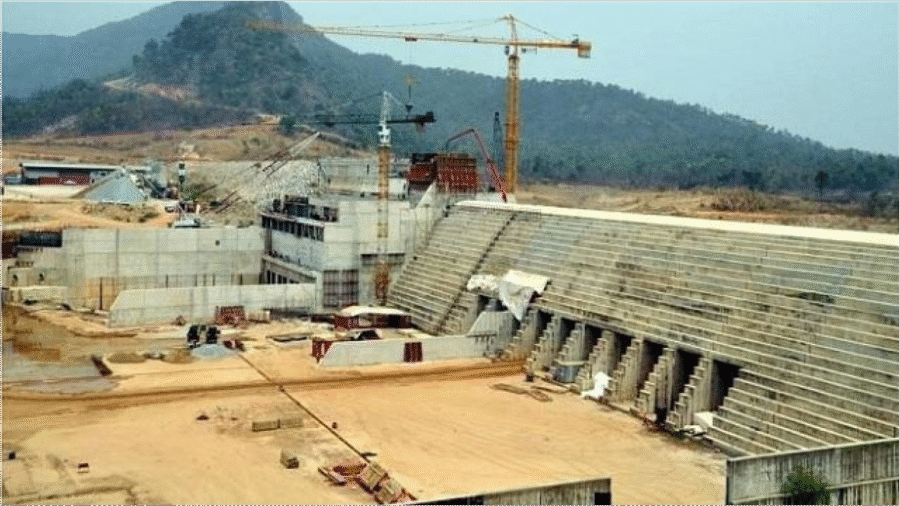
Mambilla Victory: Nigeria Escapes $3.38 Billion Legal Liability
ICC tribunal rejects Sunrise Power’s claims, orders reimbursement of Nigeria’s legal costs and removes what President Tinubu calls the biggest legal obstacle to the long-delayed hydro project.
Exclusive to Ekocity | Energy, Economy & Governance Desk
Nigeria has secured a major victory in one of the country’s longest-running infrastructure disputes, with an International Chamber of Commerce tribunal in Paris rejecting claims by Sunrise Power and Transmission Company Limited linked to the troubled Mambilla Hydroelectric Power Project in Taraba State. The ruling potentially saves Nigeria from a liability of more than $3.38 billion arising from two related arbitration claims.
The original dispute dates back to a 2003 agreement involving the proposed development of the Mambilla project. Sunrise later commenced international arbitration in 2017, seeking approximately $2.354 billion for alleged breach of contract.
A subsequent settlement dispute generated another claim, with Sunrise seeking $400 million comprising a $200 million settlement sum and a $200 million default payment. The tribunal has now rejected that claim as well.
A Ruling Against The Billion-Dollar Claim
The three-member ICC tribunal dismissed Sunrise’s argument that Nigeria had breached its contractual obligations under the settlement agreement and its addendum. It also rejected the company’s demand for the additional $400 million.
Rather than ordering Nigeria to pay Sunrise, the tribunal ordered Sunrise and its promoter, Leno Adesanya, to reimburse 75 per cent of Nigeria’s legal fees and expenses, amounting to about $11.82 million.
The ruling also determined that Adesanya was bound by the arbitration agreement and that the tribunal had jurisdiction over Nigeria’s counterclaim against him and his firm. For Abuja, this is more than a courtroom victory. It removes a significant financial and legal cloud that has followed one of Nigeria’s most ambitious power projects for years.
The Mambilla Question
The Mambilla project has survived administrations, contractual disputes and repeated delays. Conceived as a major hydroelectric development in Taraba State, it has long been presented as a potential source of large-scale baseload electricity for Nigeria. But legal disputes became one of the obstacles preventing the project from moving forward.
President Bola Ahmed Tinubu described the latest ruling as the “single biggest legal hurdle” that had paralysed the project. That assessment explains why the ruling matters beyond the money. Nigeria does not simply need to avoid paying billions of dollars. It needs to convert the legal victory into an infrastructure victory.
The Real Test Begins Now
Winning an arbitration does not generate a single megawatt of electricity. The harder task is what comes next. Nigeria must now demonstrate that the removal of the legal obstacle can translate into a bankable, properly financed and professionally executed power project.
The project itself has undergone changes in scale over the years, with the proposed generating capacity revised from earlier ambitious figures as government and financiers considered how to make the project commercially viable.
That makes the next phase crucial. Nigeria needs clarity on financing, construction arrangements, transmission infrastructure, project governance and timelines.
A Second Chance For Mambilla
The significance of the ICC ruling therefore extends beyond the courtroom. Nigeria has won the argument. Now it must win the construction battle. For a country where inadequate electricity remains one of the biggest constraints on industrialisation, the Mambilla project represents a potentially important addition to the national power system.
The arbitration victory removes a major obstacle. But Nigerians will ultimately judge the government not by the size of the legal victory, but by whether the turbines eventually turn. The courtroom has delivered Nigeria a reprieve. The real test now is whether government can turn that reprieve into megawatts.
Ekocity Energy, Economy & Governance Desk

Fawumi Kayode Abiodun
Political Analyst | CEO, Ekocity Media | Publisher, Ekocity Magazine and The Capitol Post
Add a Comment