

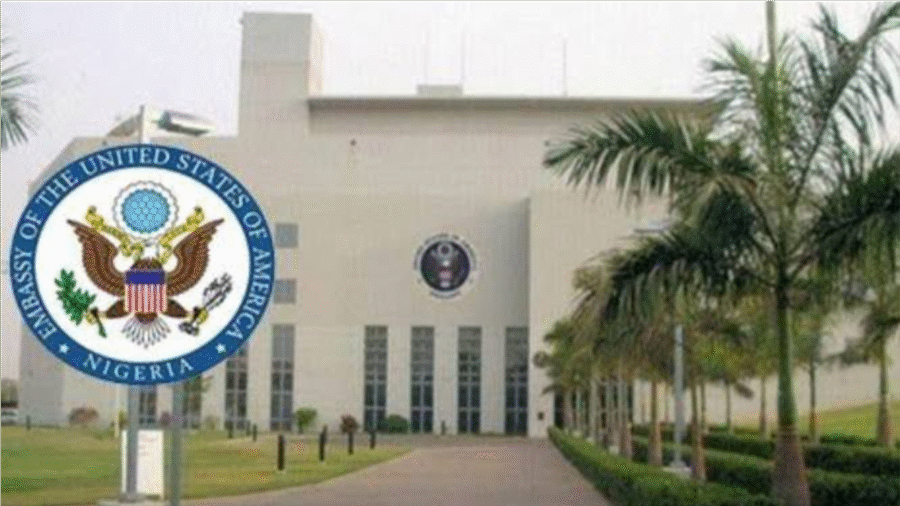
U.S. Embassy Restrictions in Abuja Raise Fresh Concerns Over Nigeria’s Security Outlook
Abuja, April 13, 2026 — The recent decision by the United States Embassy in Nigeria to scale back its operations in Abuja has triggered renewed debate about security perceptions in Nigeria’s capital and the broader implications for the country’s international image.
Last week, the United States authorized the departure of non-essential embassy staff and family members from Abuja, citing heightened security concerns. The move, which took effect around April 9, 2026, followed updated travel advisories warning U.S. citizens to exercise increased caution due to potential threats, including crime and possible unrest.
In a statement, the embassy noted that “security conditions can change quickly,” urging American citizens in Nigeria to remain vigilant and avoid non-essential movement in high-risk areas. While no specific incident was publicly linked to the decision, officials referenced ongoing security risks in parts of the country.
Impact on Abuja’s perception
For Abuja, long considered one of Nigeria’s more secure urban centres, the development has raised questions about its status as a safe diplomatic and business hub. The presence of foreign missions, international organizations, and multinational firms has historically reinforced confidence in the city’s stability.
Security analyst Ibrahim Yusuf said the move “does not necessarily mean Abuja is unsafe, but it signals a heightened level of caution from international partners.”
“These decisions are often precautionary,” Yusuf explained. “However, they can influence perception, especially among investors and the diplomatic community.”
Broader Implications for Nigeria
The restrictions come at a time when Nigeria is grappling with multiple security challenges, including insurgency in the northeast, banditry in the northwest, and sporadic violence in other regions.
Groups such as Boko Haram and Islamic State West Africa Province continue to stage attacks, particularly in the northeast, while concerns about urban security and intelligence coordination persist.
Analysts say the U.S. decision could have ripple effects beyond diplomacy, potentially influencing:
- Investor confidence, particularly in sectors reliant on foreign partnerships
- International travel and business operations, as other countries may reassess their advisories
- Nigeria’s global image, especially regarding safety and governance
Dr. Amina Sadiq, a policy researcher based in Abuja, noted that “international advisories often shape global narratives.”
“Even when they are precautionary, they can reinforce existing concerns about security management and institutional capacity,” she said.
Government Response and Reassurance
Nigerian authorities have not issued a detailed public response specific to the U.S. decision but have consistently maintained that Abuja remains secure. Security agencies continue to emphasize ongoing efforts to safeguard the capital and other major cities.
Officials argue that such advisories are not uncommon and should not be interpreted as a definitive assessment of Nigeria’s overall security situation.
A Test of Confidence
The development places renewed pressure on Nigerian authorities to strengthen visible security measures, improve intelligence coordination, and reassure both citizens and international partners.
For Abuja, the immediate impact may be limited to diplomatic circles, but the symbolic weight of the decision is significant. As Nigeria seeks to position itself as a destination for investment and global engagement, managing both the reality and perception of security will remain critical.
Whether the restrictions are short-lived or extended will likely depend on how quickly confidence can be restored—and how effectively authorities respond to both domestic and international concerns.
Blessing Anolaba
Editorial & Creative Correspondent
A storyteller and journalist passionate about telling stories for policy change and impact.
Add a Comment