


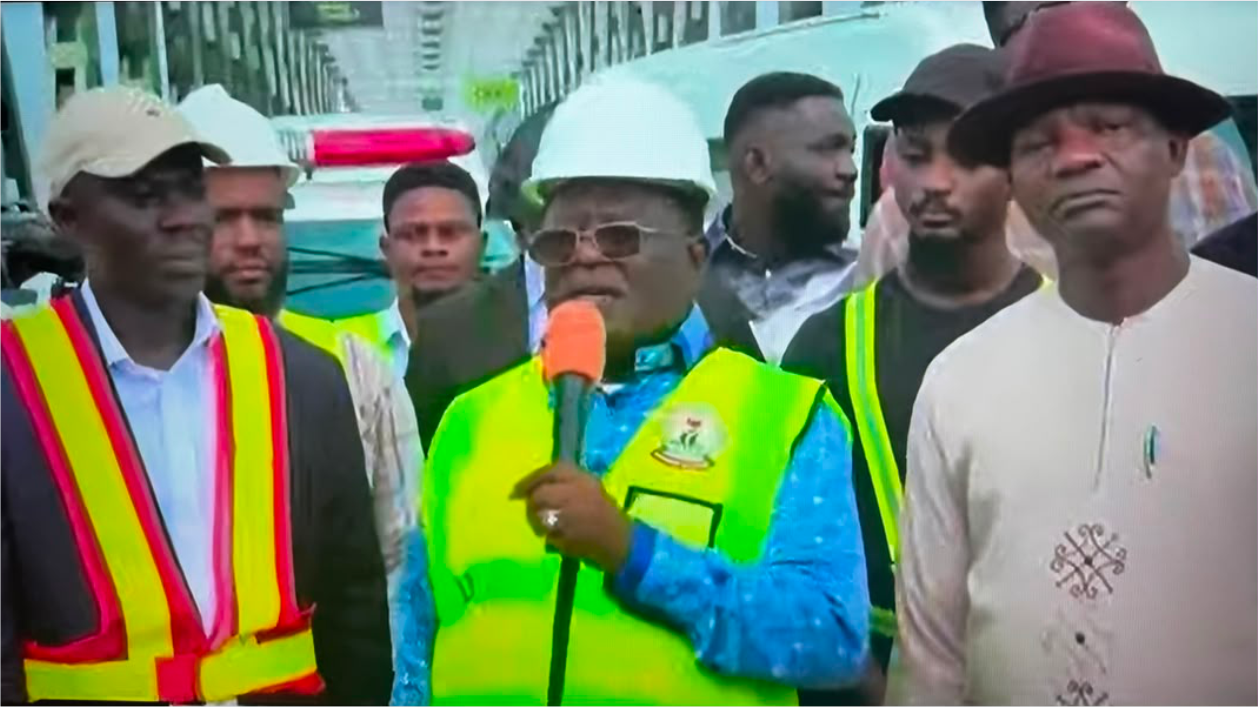

At the First Niger Bridge, Umahi discovered that bolts, expansion joints and other critical metal components had been removed, prompting orders for immediate repairs as well as the installation of CCTV cameras and solar-powered lighting.
The government subsequently moved to strengthen surveillance, linking the proposed monitoring system to security agencies so that suspected vandals can be identified and apprehended.
For Umahi, the message is increasingly blunt: Nigeria cannot spend billions building strategic transport infrastructure only to allow criminal activity and uncontrolled extraction to undermine it.
The issue is larger than the Niger Bridge. Nigeria’s bridges carry highways, commerce and entire regional economies. Once a major crossing is compromised, the consequences can extend far beyond engineering — disrupting freight movement, commuting and local businesses.
The minister’s intervention therefore represents a shift from simply building infrastructure to protecting infrastructure.NThe challenge now is enforcement.
Warnings alone will not stop illegal dredging. Surveillance, patrols, prosecution and sustained monitoring will have to follow. For the Niger Bridge, the river may be underneath the road. But increasingly, the battle to protect the bridge is being fought beneath the water.

Fawumi Kayode Abiodun
Political Analyst | CEO, Ekocity Media | Publisher, Ekocity Magazine and The Capitol Post
Add a Comment