

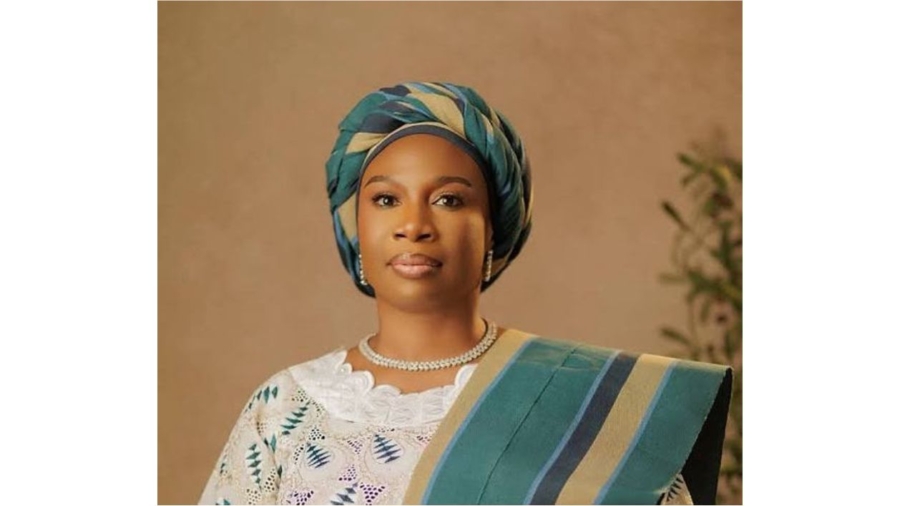
DAMILOLA SHONAYA JAMES: THE TECHNOCRAT ENTERING LAGOS’ 2027 POLITICAL CONVERSATION
As Lagos prepares for another fiercely contested election, the emergence of Damilola Shonaya James is drawing attention to a different kind of political proposition — one built around professional expertise, social questions and the possibility of bringing more technocratic voices into public office.
Exclusive to Ekocity | Politics & Governance Desk
Lagos politics has never been short of big personalities. Governors, party strategists, business leaders, grassroots organisers and political dynasties have competed for influence in a state where control of government means influence over one of Africa’s most consequential urban economies. But occasionally, another kind of political figure enters the conversation — someone whose public identity has been shaped as much by professional and intellectual work as by conventional party politics.
Damilola Shonaya James is emerging in that category. Her reported emergence as a 2027 deputy-governorship candidate in Lagos places her in a particularly interesting political space: that of the technocrat attempting to translate professional experience and ideas about society into electoral politics.
A July 2026 report by NTA Lagos identified Shonaya James as an author and quoted her discussing the social issues that inspired her work. (Facebook) That detail may prove significant. Political campaigns increasingly demand more than slogans. Lagos voters are confronting questions about housing, transport, flooding, environmental management, employment, education, healthcare, security and the cost of living.
The next political generation will therefore be judged not only by its ability to mobilise crowds, but by its ability to understand increasingly complicated systems. That is where the technocrat-versus-politician debate becomes relevant. Technocrats often enter politics promising evidence, competence and professional management. Politicians, meanwhile, understand something technocrats sometimes underestimate: governing Lagos requires coalition-building, political negotiation and an intimate knowledge of communities extending from affluent island districts to densely populated mainland neighbourhoods.
A deputy governor sits precisely at that intersection. The office requires political loyalty, but also administrative competence. It requires the ability to support the governor while maintaining an independent capacity to understand policy. And it demands the ability to communicate government priorities to a population of millions. For Shonaya James, therefore, the 2027 opportunity is potentially larger than the symbolism of being a woman on a governorship ticket. It is a test of whether professional credibility can be converted into political legitimacy.
That conversion is not automatic. A compelling résumé does not guarantee votes. Neither does a sophisticated policy argument guarantee grassroots support. Lagos elections are won constituency by constituency, ward by ward and polling unit by polling unit. That is why her political organisation, party structure, campaign network and policy platform will ultimately matter as much as her professional background.
The opportunity, however, is considerable. Nigeria’s political conversation increasingly includes demands for leaders who can combine political experience with technical competence. A candidate who can convincingly explain how Lagos can expand its economy while improving everyday life could occupy a distinctive space in the 2027 debate. For Shonaya James, the central challenge will be to answer a simple question: Why should Lagos voters believe that a technocrat can do politics well enough to govern? The answer will have to go beyond biography. It will require a clear programme. It will require evidence. And, above all, it will require a political coalition capable of turning ideas into votes. Lagos has seen outsiders challenge established political structures before. It has also demonstrated that enthusiasm alone is not enough.
The 2027 election will test whether emerging political figures can build something more durable: a movement capable of combining competence, credibility and grassroots power. Damilola Shonaya James now has an opportunity to make that case. Whether she becomes a footnote in the crowded 2027 field or one of the election’s unexpected political stories will depend on what comes next.
For Lagos, the more interesting question may be whether the next chapter of its politics will belong entirely to the familiar political establishment or whether there is room for a new generation of technocrats willing to enter the arena. The campaign has not yet answered that question. But the conversation has begun.

Fawumi Kayode Abiodun
Political Analyst | CEO, Ekocity Media | Publisher, Ekocity Magazine and The Capitol Post
Add a Comment