

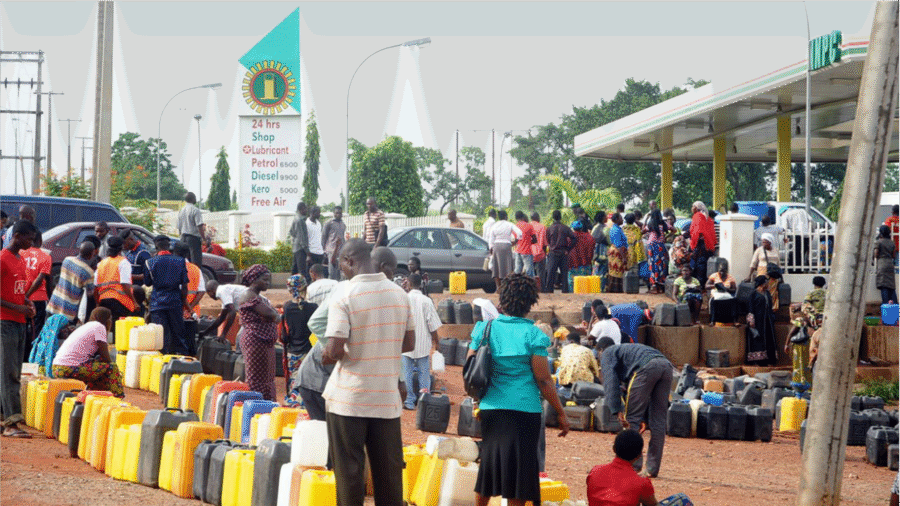
High Cost of Transportation in Abuja: Government Promises, Missing Buses, and the Fuel Burden
Residents of Abuja are grappling with a steep rise in transportation costs, driven largely by persistently high fuel prices and limited public transit options. For many workers, students, and small business owners, daily commuting has become a growing financial strain, raising urgent questions about government interventions and their visibility on the streets.
Fuel Prices at the Core of the Crisis
Since the removal of petrol subsidies in 2023, pump prices have remained volatile, placing pressure on transport operators who pass costs directly to commuters. The downstream sector, overseen by the Nigerian National Petroleum Company Limited, has struggled to stabilize supply and pricing, with fluctuations often tied to exchange rate pressures and global oil dynamics.
For commercial drivers in Abuja, fuel now accounts for the bulk of operating costs. As a result, fares across major routes from Nyanya to the city centre, Lugbe to Wuse, and Kubwa to Maitama have doubled or, in some cases, tripled over the past year.
Government Response: Promises vs. Reality
In response to the transport crisis, the federal government, under Bola Ahmed Tinubu, announced a series of palliative measures aimed at easing mobility challenges. Central among these was the rollout of compressed natural gas (CNG)-powered buses, intended to provide cheaper and more sustainable public transport.
The initiative, coordinated through the Presidential Compressed Natural Gas Initiative, promised thousands of buses nationwide, alongside conversion centres for vehicles to switch from petrol to CNG.
In parallel, authorities in the FCT, led by the Federal Capital Territory Administration, also spoke of deploying large-capacity buses often referred to as “long buses” to improve intra-city commuting and reduce reliance on informal transport systems.
Where Are the Buses?
Despite these announcements, many Abuja residents say they have yet to see meaningful changes on the ground. The much-publicized CNG buses remain largely absent from major routes, and the anticipated long buses have not significantly altered commuting patterns.
Where pilot deployments exist, they appear limited in scale insufficient to meet the daily demand of a rapidly growing city. Bus stops remain overcrowded, and commuters continue to rely on minibuses and motorcycles, both of which are more expensive and, in many cases, less safe.
Transport unions and commuters point to slow procurement processes, limited refueling infrastructure for CNG, and coordination gaps between federal and FCT authorities as key reasons for the delay.
Structural Gaps Beyond Fuel
While high fuel costs are the immediate trigger, the transportation crisis also reflects deeper systemic issues. Abuja lacks a fully functional, affordable mass transit system that can absorb shocks like fuel price increases. Previous investments in public transport have been inconsistent, and accountability for transport projects remains weak.
Without reliable alternatives, any fluctuation in fuel prices directly translates into higher fares leaving citizens with little buffer.
The Human Cost
For low- and middle-income earners, transport now consumes a significant share of monthly income. Workers are adjusting by cutting back on trips, arriving late to work, or relocating farther from the city centre where rent is cheaper but transport costs remain high.
Small businesses, especially those dependent on daily logistics, are also feeling the squeeze, with increased transport costs feeding into higher prices for goods and services.
What Needs to Change
Experts argue that beyond short-term palliatives, the government must accelerate the rollout of mass transit systems, ensure transparency in procurement, and invest in infrastructure that supports alternative fuels like CNG.
Equally important is public communication: clear timelines, visible deployment, and measurable targets could rebuild public trust in ongoing reforms.
The high cost of transportation in Abuja is no longer just an economic inconvenience; it is a governance test. Until promised solutions like CNG and long buses move from policy announcements to visible, functional systems, residents will continue to bear the brunt of a crisis rooted as much in fuel prices as in delayed implementation.
Blessing Anolaba
Editorial & Creative Correspondent
A storyteller and journalist passionate about telling stories for policy change and impact.
Add a Comment