

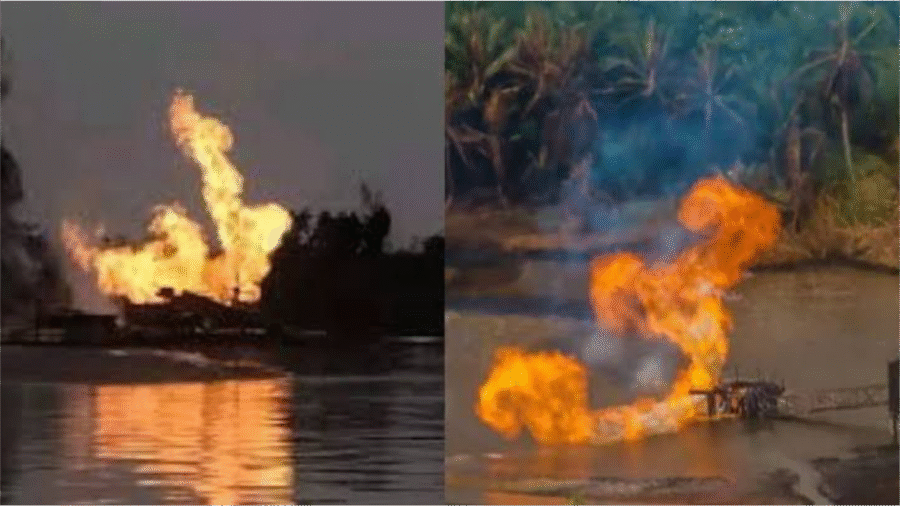
Ondo Oil Fire: A Tragedy That Demands Accountability, Not Silence
The recent oil fire in Ondo State is yet another painful reminder of the human and environmental cost of Nigeria’s extractive economy. Beyond the flames and smoke lies a deeper story; one of weak accountability, opaque ownership structures, and a governance system that too often fails the very citizens it is meant to protect.
While details of the incident continue to emerge, what is already clear is that this is not an isolated event. Across oil-producing communities in the Niger Delta and beyond, fires, spills, and leaks have become disturbingly routine. Each incident leaves behind scorched land, polluted water, and livelihoods in ruins. For affected communities in Ondo, the consequences are immediate: loss of income for fishermen and farmers, rising health risks from toxic exposure, and the long-term degradation of ecosystems that sustain daily life.
Yet, as with many similar disasters, the critical questions remain unanswered. Who owns the asset where the fire occurred? Who is responsible for maintaining safety standards? And perhaps most importantly; who will be held accountable?
This is where the issue of beneficial ownership transparency becomes central. In Nigeria’s oil sector, it is not uncommon for assets to be held through complex layers of shell companies and intermediaries. These opaque structures make it difficult to identify the real individuals who profit from these operations. When disasters happen, responsibility becomes diffused, investigations stall, and justice is delayed or denied entirely.
Without clear disclosure of beneficial ownership, accountability is weakened at every level. Regulators struggle to enforce compliance, communities are left in the dark about who to engage or demand answers from, and corrupt practices find fertile ground to thrive. Transparency is not just a technical reform; it is a necessary condition for justice.
Environmental justice must also move to the center of this conversation. Communities in resource-rich regions like Ondo bear the brunt of environmental harm while receiving little of the benefits. This imbalance reflects a deeper governance failure: the inability to ensure that natural resource wealth translates into improved well-being for citizens.
For governance to work, it must prioritize people. This means enforcing environmental regulations without compromise, ensuring that companies adhere to global safety standards, and establishing clear, accessible channels for community redress. It also means strengthening institutions responsible for oversight and ensuring they are adequately funded, independent, and free from political interference.
Nigeria has already taken steps in the right direction. Commitments under initiatives like the Nigeria Extractive Industries Transparency Initiative have introduced frameworks for disclosure and accountability. However, implementation remains inconsistent, and loopholes persist. Beneficial ownership registers must be fully operational, publicly accessible, and regularly updated. Data must not just exist; it must be usable and actionable.
The Ondo oil fire should not fade into the cycle of outrage and forgetfulness. It should serve as a turning point, a moment to demand systemic reform. Accountability must be enforced not just after disasters occur, but as a preventive measure. Transparency must move from policy documents to everyday practice. And environmental justice must be treated not as an abstract ideal, but as a lived reality for communities.
Until these changes are made, incidents like the Ondo oil fire will continue to recur, each one eroding public trust and deepening inequality. Nigeria’s natural resources have the potential to drive development and prosperity. But without accountability and transparency, they will remain a source of harm rather than hope.
The flames in Ondo must not only be extinguished, they must ignite a national commitment to do better.
Blessing Anolaba
Editorial & Creative Correspondent
A storyteller and journalist passionate about telling stories for policy change and impact.
Add a Comment