Ozumba Mbadiwe: Is Lagos Building Its Own Skyline Boulevard?
By Ekocity International Desk
There are roads that take you somewhere, and there are roads that become somewhere. Ozumba Mbadiwe Avenue in Victoria Island is increasingly beginning to belong to the second category.
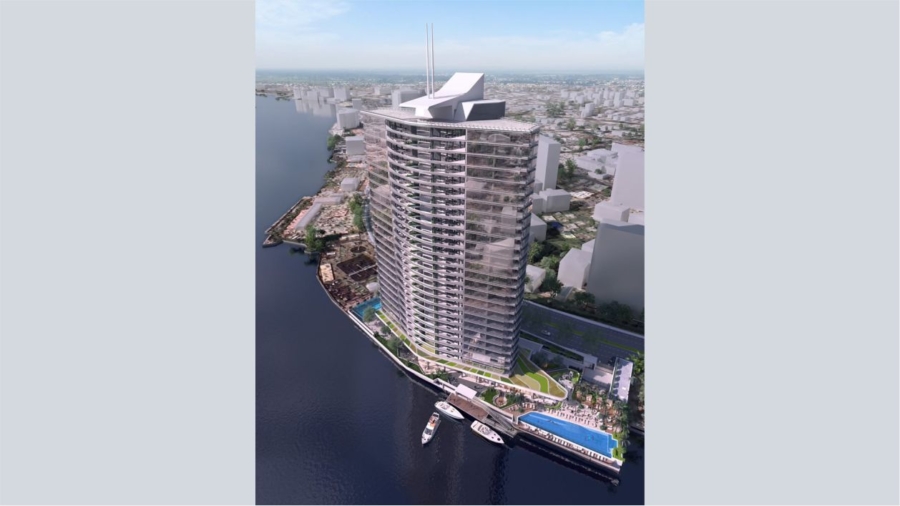
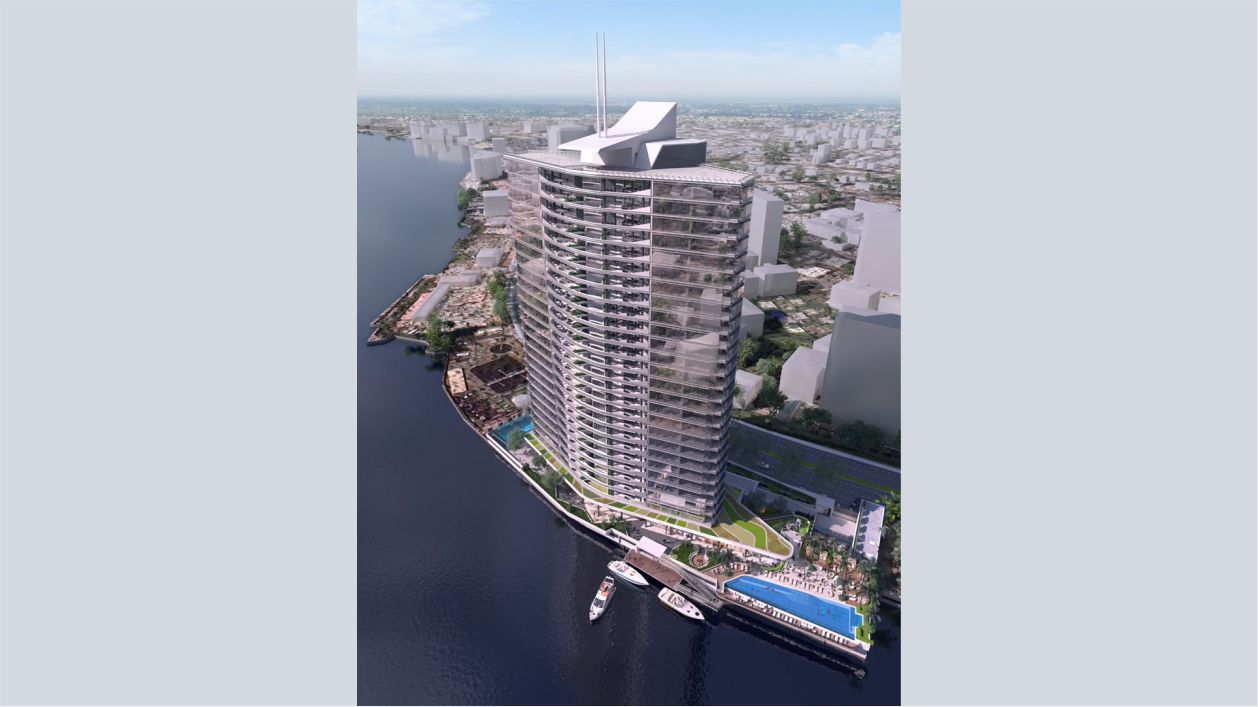
Running along the Five Cowries Creek, the road has long been one of Lagos’s important waterfront corridors. But its character is changing. Glass and concrete are rising where low-rise commercial buildings once dominated. Hotels, offices and luxury residences are gathering around the road, while new towers are beginning to give the waterfront a vertical identity of its own.
The transformation is not yet Dubai. It is not Doha. It is certainly not Tokyo. But that is precisely what makes it interesting. Cities rarely become international destinations simply because someone builds a tall building. They become memorable when architecture, transportation, commerce, public space and geography begin telling the same story.
Ozumba Mbadiwe may be approaching that moment. The emerging skyline includes developments such as Civic Centre Towers and The Pacific, while newer projects are adding another generation of residential and hospitality architecture. Reportage Tower, for example, is planned as a 27-floor hotel-apartment development with 611 apartments overlooking the Lagos waterfront.
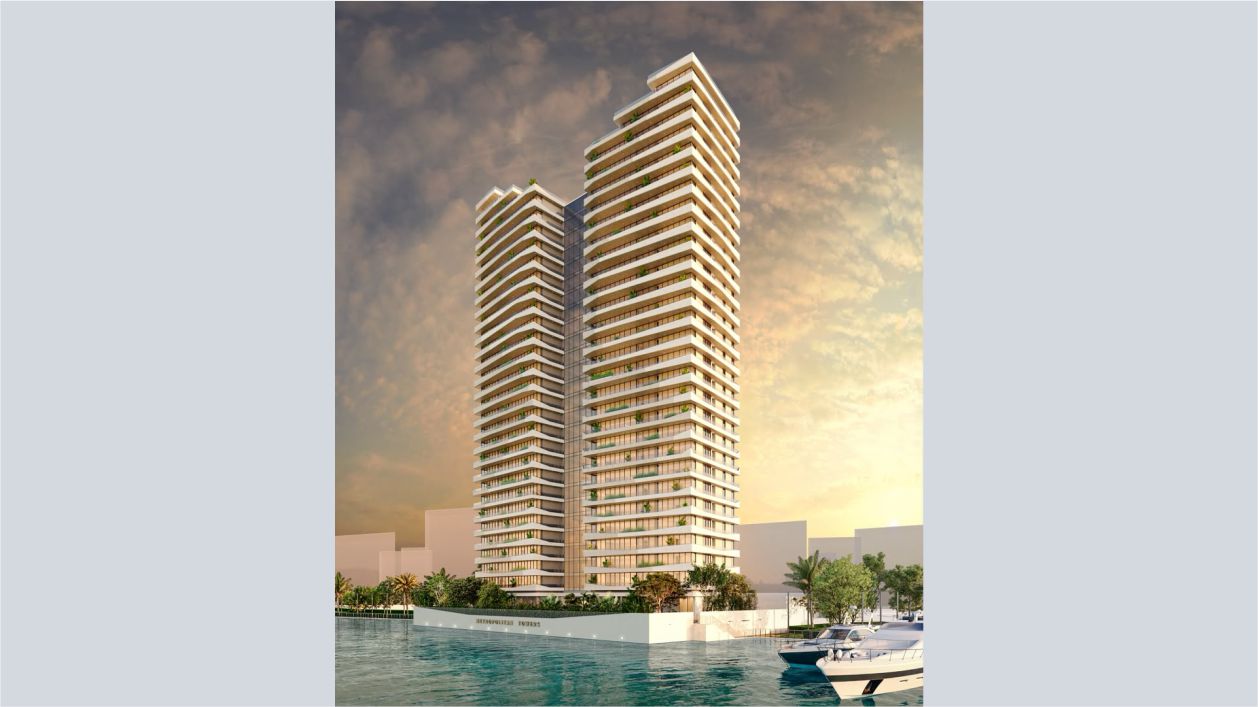
Metropolitan Towers, another major development on the avenue, is adding to the sense that this stretch of Victoria Island is becoming a vertical luxury corridor. The comparison with Dubai is inevitable. The Sheikh Zayed Road Lesson Dubai’s Sheikh Zayed Road is one of the world’s clearest examples of a highway becoming an urban symbol.
The road is lined by towers of different generations, uses and architectural styles. Offices, hotels, residences and retail occupy the same metropolitan corridor, creating a cityscape that has become almost inseparable from Dubai’s international image. But the important lesson is not simply the height of Dubai’s buildings. It is density.
Sheikh Zayed Road became powerful visually because development accumulated along a major movement corridor. The road became a stage on which the city displayed its economic ambition.
Ozumba Mbadiwe has some of the same ingredients, although on a dramatically smaller scale.
It has water.
It has premium real estate.
It has proximity to Victoria Island’s business district.
It connects important parts of Lagos.
And increasingly, it has towers.
What Lagos does not yet have is Dubai’s extraordinary infrastructure discipline and integrated metropolitan planning. That distinction matters. A skyline can be spectacular from a distance and frustrating at street level. The real test for Ozumba Mbadiwe will therefore not be how many towers rise. It will be what happens between them.
Doha: When Architecture Becomes a City’s Signature If Dubai demonstrates the power of a skyscraper corridor, Doha demonstrates something different: how a concentrated skyline can become part of a city’s international identity. West Bay transformed from relatively open coastal land into one of the most recognisable collections of skyscrapers in the Gulf. Today, the district’s towers form the image many people associate with modern Doha.
What makes West Bay particularly interesting is architectural variety. The towers do not all look alike. Some twist. Some curve. Some borrow from traditional forms. The Zig Zag Towers, for instance, rise 143 metres with distinctive interlocking forms and hundreds of residential apartments. Lagos has an opportunity to learn from that. Ozumba Mbadiwe should not become a wall of anonymous glass. Its architecture could instead express something unmistakably Lagos: tropical light, water, movement, culture and the city’s restless energy.
The waterfront is already an asset.
The skyline should become its architecture.
Tokyo’s More Difficult Lesson
Tokyo offers a different warning.


The Japanese capital does not depend on one road or one cluster of skyscrapers to create its identity. Its skyline is the product of intense urban density, transportation, commerce and neighbourhood life.
Shibuya’s redevelopment demonstrates how high-rise development can be integrated with public transportation, retail, entertainment and public viewing spaces. The approximately 230-metre Shibuya Scramble Square, completed in 2019, is part of a much broader transformation around Shibuya Station.
That is the lesson Lagos should pay attention to.
A skyline is not a collection of buildings.
It is an urban experience.
The pedestrian walking beneath the towers matters as much as the investor looking down from the 30th floor.
The commuter matters.
The restaurant matters.
The public space matters.
The traffic matters.
The view matters.
And, perhaps most importantly in Lagos, the drainage matters.
Lagos Has the Waterfront Advantage
There is something Ozumba Mbadiwe possesses that neither Dubai’s Sheikh Zayed Road nor Tokyo’s Shibuya can replicate in quite the same way: the particular relationship between Lagos and water. The Five Cowries Creek gives the road a natural edge and a visual openness that many inland business districts lack. From the upper floors of its towers, Lagos can be seen not simply as a mass of buildings but as a city surrounded by water, movement and sky.
That creates an opportunity to build something more sophisticated than another luxury-address corridor. Imagine a waterfront boulevard where architecture, hospitality, restaurants, offices, residences, pedestrian spaces, art and nightlife operate as parts of the same urban ecosystem. That would be more important than another tower.
It would be placemaking.
The Skyline Question
The temptation in Lagos is to measure progress in floors.
Twenty floors.
Twenty-five.
Thirty.
Forty.
But cities are not judged by floor counts alone. They are judged by what those floors create at ground level. Ozumba Mbadiwe is entering an important phase. Its emerging towers suggest that Victoria Island’s relationship with the waterfront is changing from a predominantly low-rise commercial landscape into a more vertical international district.
The question is whether the transformation will be planned as a district or simply assembled one building at a time.
Dubai shows what can happen when towers, transport and ambition reinforce one another.
Doha shows how architecture can become a national image.
Tokyo shows that density becomes truly successful when buildings are connected to the life of the street.
Lagos has an opportunity to take something from all three without becoming any of them.
Because Lagos does not need another Dubai. It needs a Lagos skyline. And perhaps that skyline is already beginning to rise along Ozumba Mbadiwe.

Fawumi Kayode Abiodun
Political Analyst | CEO, Ekocity Media | Publisher, Ekocity Magazine and The Capitol Post


Add a Comment