

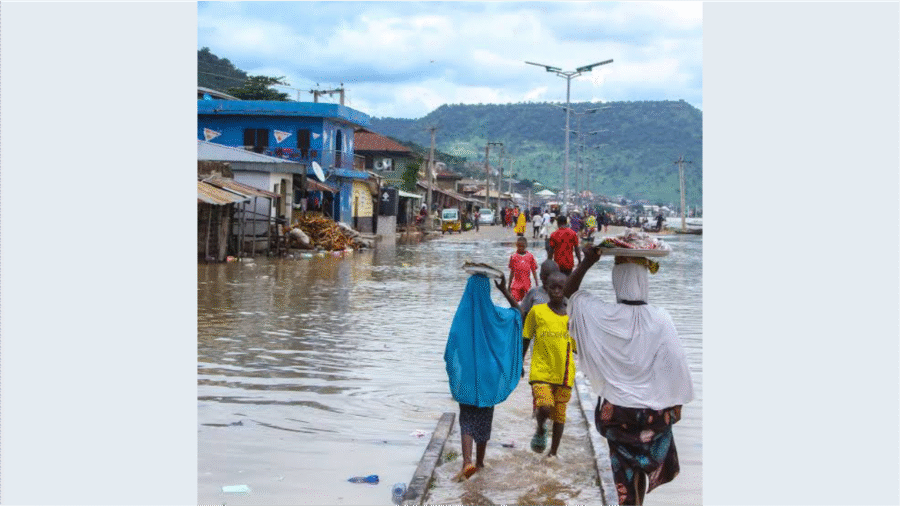
Rising Waters, Rising Risks: Nigeria Faces Widespread Flood Threat in 2026
Nigeria is once again on the brink of a major environmental and humanitarian challenge, as the Federal Government warns that much of the country could face significant flooding in 2026. The latest Annual Flood Outlook signals a looming crisis—one that extends far beyond geography and into the daily lives of millions.
According to projections released by the Federal Ministry of Water Resources and Sanitation, 33 states and the Federal Capital Territory have been identified as high-risk flood zones. More than 14,000 communities across 266 local government areas are expected to be directly exposed, underscoring the scale and urgency of the threat.
A Nationwide Risk
The warning is not limited to rural or riverine areas. Major urban centres—including Abuja, Lagos, Ibadan, and Port Harcourt—are expected to experience flash flooding. Rapid urbanisation, poor drainage infrastructure, and unregulated construction have made these cities increasingly vulnerable to heavy rainfall.
In coastal and riverine states such as Bayelsa State, Delta State, Rivers State, Lagos State, and Ondo State, the risks are even more severe. Rising sea levels and tidal surges are expected to compound the impact, threatening homes, farmlands, and critical infrastructure.
Beyond the high-risk zones, an additional 15,000 communities fall under moderate flood risk—suggesting that a vast portion of Nigeria could experience some level of flooding during the rainy season.
The Human Cost of Flooding
While the statistics are alarming, the real impact of flooding is measured in disrupted lives.
For many Nigerians, floods mean more than water—they mean displacement, loss of livelihoods, and deepening poverty. Farmers risk losing entire harvests, worsening food insecurity in a country already grappling with rising food prices. Small businesses, often operating on thin margins, face destruction of goods and prolonged closures.
In urban areas, floods can shut down transportation networks, damage homes, and contaminate water sources. For low-income communities, where housing is often informal and drainage systems are weak or nonexistent, the effects are particularly devastating.
Healthcare access is also threatened. Floodwaters can increase the spread of waterborne diseases and make it difficult for residents—especially pregnant women and children—to reach medical facilities. In many cases, primary healthcare centres themselves are not equipped to withstand flood impacts.
Preparedness and Gaps
The government says it is strengthening its response capacity through improved forecasting systems, including AI-powered modelling and real-time monitoring tools. These are expected to enhance early warning systems and allow for quicker emergency interventions.
However, warnings alone may not be enough.
Past flood events in Nigeria have shown that early alerts do not always translate into timely action, especially at the community level. Limited infrastructure, weak enforcement of environmental regulations, and low public awareness often undermine preparedness efforts.
Authorities are now urging state governments and residents in vulnerable areas to take preventive measures—from clearing drainage systems to relocating from high-risk zones where possible.
A Familiar but Escalating Threat
Flooding is not new to Nigeria, but its scale and frequency are increasing. Climate change, combined with rapid urban growth and environmental mismanagement, is intensifying the risks year after year.
As the rainy season approaches, the country faces a critical test: whether lessons from past disasters will translate into meaningful action. Without coordinated efforts and sustained investment in resilience, the consequences could once again be severe.
Because beyond the forecasts and figures, flooding in Nigeria is ultimately a human story—one of communities at risk, livelihoods on the line, and the urgent need to protect both.
Blessing Anolaba
Editorial & Creative Correspondent
A storyteller and journalist passionate about telling stories for policy change and impact.
Add a Comment